Photo in Cowboystatedaily (Courtesy Alexa Edwards)
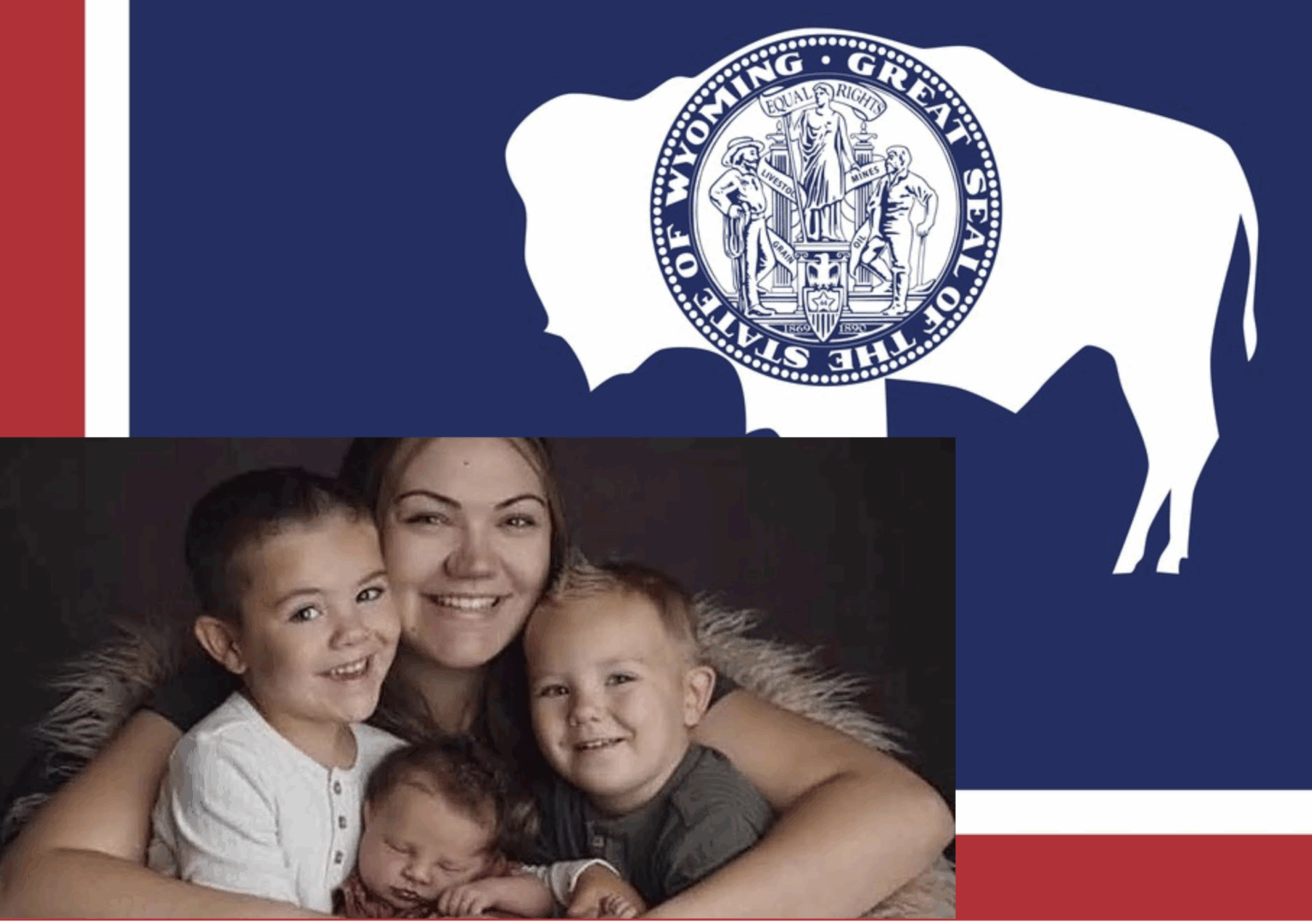
Another murder/suicide in Wyoming and the state has not adopted any changes that would allow more transparency when such tragedies occur and, perhaps, a better understanding of why the deaths are occurring. Despite AbleChild spending months of encouraging state legislators to close this information accountability gap, the state still has no policies in place to remotely begin to understand why the deadly violence is happening.
AbleChild’s core argument in pushing the data legislation has been consistent: prevention cannot be built on stigma narratives or incomplete case stories; it must be built on statewide, comparable data that allows policymakers to see what is actually present in suicides, homicides, and murder-suicides—especially when psychiatric drugs are involved.
That’s why AbleChild supported the “Wyoming Death Data Collection and Toxicology Transparency Act” (draft 26LSO-0205), a proposal designed to force the system to stop guessing and start documenting. The proposed legislation would require toxicology screening in violent deaths and “measurement of therapeutic levels for psychiatric drugs,” including recorded blood concentrations and whether detected levels are therapeutic, subtherapeutic, or toxic. The bill was similar to the landmark Tennessee bill that AbleChild pioneered after the deadly Covenant school shooting.
The legislation would also require those findings to be recorded through key official channels—so the information is available to lawmakers deciding public policy. The people of Wyoming should also be aware that the death data collection the state is currently using is provided as the World Health Organization standards of which America is no longer a member of the WHO. It is time to revamp the states death data collection standards.
It was disheartening that during committee debate, the Wyoming medical examiner/coroner raised the claim that collecting and reporting psychiatric drug data could discourage people from seeking psychiatric treatment—an argument that Implies Wyoming treats autopsy data as a threat. That position is backwards: a credible mental-health system doesn’t fear accurate information, and a state serious about suicide and violence prevention doesn’t ignore the role of mind-altering medications in the deaths by labeling data collection as “stigmatizing.”
The bill would have done what responsible public health always does: standardize the data so outcomes can be evaluated, including the following.
- Require toxicology testing in all violent deaths.
- Include psychiatric drugs as a defined as a reportable category—not an optional footnote.
- Require quantification, not just “present/absent,” so “therapeutic” exposure is still visible to researchers and lawmakers.
- Require compilation and reporting so the legislature may utilize the information to enact appropriate policy, oversight, and funding decisions.
Wyoming’s refusal to embrace this legislation has real consequences. When the state repeatedly frames these catastrophes as “mental health crises,” but refuses to require systematic data collection of psychiatric-drug exposure in violent deaths, it rigs the conversation toward sentiment and away from facts.
Families are forced to live with unanswered questions, communities are left with rumor, and legislators are asked to craft policy with their hands tied behind their backs—unable to see statewide trends involving polypharmacy, recent medication changes, postpartum exposure, withdrawal, or other drug-related signals that can only be examined when concentrations are consistently collected and recorded.
The stakes are not theoretical. In the Cowboy State Daily reporting on the Clinger/Moon case, the public learns intimate details of conflict, fear, and warning signs—but no toxicology picture is presented, and no standardized state process is described that would ensure those data exist in a form policymakers can use. That is the data gap AbleChild has been warning about in Wyoming: tragedy after tragedy gets categorized, mourned, and filed away, while the state declines to build the dataset that could reveal preventable patterns.
Be the Voice for the Voiceless
AbleChild is a 501(3) C nonprofit organization that has recently co-written landmark legislation in Tennessee, setting a national precedent for transparency and accountability in the intersection of mental health, pharmaceutical practices, and public safety.
What you can do. Sign the Petition calling for federal hearings!
Donate! Every dollar you give is a powerful statement, a resounding declaration that the struggles of these families will no longer be ignored. Your generosity today will echo through generations, ensuring that the rights and well-being of children are fiercely guarded. Don’t let another family navigate this journey alone. Donate now and join us in creating a world where every child’s mind is nurtured, respected, and given the opportunity to thrive. As a 501(c)3 organization, your donation to AbleChild is not only an investment in the well-being of vulnerable children but also a tax-deductible contribution to a cause that transcends individual lives.
Be the Voice for the Voiceless
AbleChild is a 501(3) C nonprofit organization that has recently co-written landmark legislation in Tennessee, setting a national precedent for transparency and accountability in the intersection of mental health, pharmaceutical practices, and public safety.
What you can do. Sign the Petition calling for federal hearings!
Donate! Every dollar you give is a powerful statement, a resounding declaration that the struggles of these families will no longer be ignored. Your generosity today will echo through generations, ensuring that the rights and well-being of children are fiercely guarded. Don’t let another family navigate this journey alone. Donate now and join us in creating a world where every child’s mind is nurtured, respected, and given the opportunity to thrive. As a 501(c)3 organization, your donation to AbleChild is not only an investment in the well-being of vulnerable children but also a tax-deductible contribution to a cause that transcends individual lives.