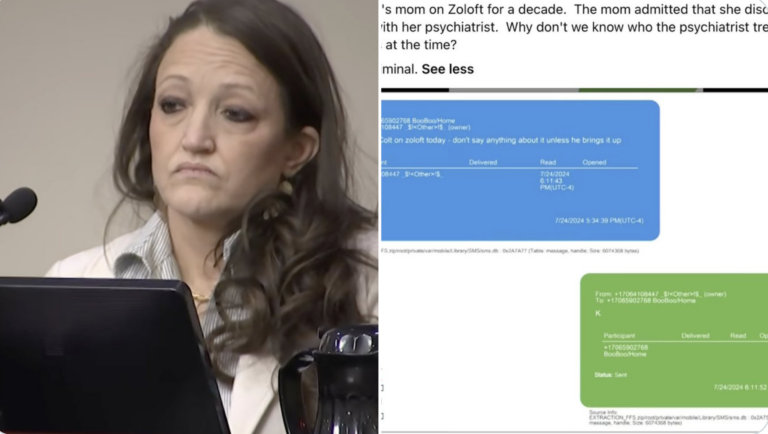

It is ironic that in the same week that the Lindsay Clancy murder trial was wrapping up, the New York Post would run an article about moms being diagnosed with the alleged mental disorder ADHD. And regardless of the outcome, the Clancy trial, if anything, has shined a very bright light on the over-drugging of women as a method of behavioral “treatment,” making the Post’s article completely tone-deaf.
Surprisingly, of all the subjective psychiatric mental disorders Clancy had been diagnosed with, ADHD was not one of them. But like Clancy’s diagnoses of depression, anxiety, bipolar I and II when it comes to ADHD, there just is no objective identifiable abnormality. The fact is there is no blood test, scan, or biomarker that identifies any sort of ADHD brain malfunction that can be targeted for treatment. It is also a fact that all ADHD diagnosing depends on verbal communication about personal history and behavior.
The gist of the Post’s article is that women are apparently learning from their own daughters struggle and according to one mother, “it kind of felt like my own childhood was being repeated in front of me.” Maybe. Sounds normal, but there isn’t any real difference in adult women and young girls diagnosing of ADHD other than one is current behavior and the other is historical.
According to the American Psychiatric Association’s (APA) Diagnostic and Statistical Manual, (DSM-5), children ages 16 and under must meet 6 out of 9 symptoms such as running around, climbing on furniture, unable to sit still, missing school assignments, disorganized bedrooms, not paying attention in class, interrupting teachers or engaging in physically dangerous play.
Adult women, on the other hand, 17 and older, must meet only 5 out of 9 symptoms like restlessness, leg jiggling, a drive to always stay busy, missing work deadlines, struggling to balance chores/bills, losing focus, impulsive spending, interrupting conversations and making hasty decisions.
There you go, ladies, meet any five of these extraordinarily subjective behaviors and, voila, you have the mental disorder ADHD. In fact, the author of the article writes, “the reality is, ADHD can be a superpower…” One could argue that the reality is not who experiences these behaviors, but rather who doesn’t lose focus, spend too much money on things we really don’t need, and interrupt when others are talking? One could argue that the person who doesn’t exhibit these completely normal behaviors might be on some other psychiatric drug that renders the patient feeling nothing, allowing for any behavior to be appropriate.
Nevertheless, even though there is no malfunction of the brain that is ADHD, it is one of the top psychiatric diagnoses and drugging is the go-to “treatment.” Of course, the word “treatment” must be used lightly because there is no targeted abnormality but, rather, the chemical drug will change someone’s behavior. For example, methylphenidate (Ritalin, Concerta and Focalin) is a Schedule II controlled substance which means it carries a high potential for abuse and severe psychological or physical dependence. These stimulants reportedly help improve focus, reduce impulsivity and control hyperactive behavior in children and adults. According to the Drug Enforcement Administration (DEA), like cocaine, “these drugs are considered dangerous.”
On the flip side, the Food and Drug Administration (FDA) report that “the mode of action in man is not completely understood…there is neither specific evidence which clearly establishes the mechanism whereby Ritalin produces its mental and behavioral effects in children, nor conclusive evidence regarding how these effects relate to the condition of the central nervous system.” In other words, the FDA hasn’t got a clue how the drug “works” as “treatment” for the alleged ADHD.
There are, however, very real serious side effects associated with ADHD “treatments” that may need to be considered as part of that whole “superpower” thing, including irritability, anxiety, restlessness, sleep disorder, aggression, depression, abnormal behavior, confused state, nervousness, hallucinations, anger, suicidal ideation, altered mood, mania and abnormal thinking to name a few.
Then there is that other sticky matter of women who also may have been diagnosed with any number of other alleged mental disorders, like Lindsay Clancy, including depression, bipolar and anxiety. Are these women now embracing ADHD drugs on top of other mind-altering drug “treatments?”
Given the Centers for Disease Control and Prevention (CDC) estimate that 20 million women in the U.S. take drugs as “treatment” for depression, it seems possible that there could be some serious crossover cocktail “treatments.” Women make up more than half of the population using antipsychotics and one in five women take an antianxiety medication.
Given these staggering drugging data, it seems impossible that there are any women left in the U.S. who aren’t drugged for some alleged mental disorder and, adding the alleged ADHD to the psychiatric assault on women, makes it a perfect diagnosing storm. The nation is already dealing with tens of millions of women on cocktails of mind-altering drugs. Is it necessary to add the alleged ADHD drug “treatment” to the cocktail?
Presumably so. One woman interviewed for the New York Post article reported “there is no shame in needing help to feel like the best version of yourself.” Perhaps. But Lindsay Clancy wanted to be the best version of herself for her kids and sought psychiatric help. Five psychiatric diagnoses and 32 prescriptions of 13 mind-altering drugs later, would anyone seriously agree that Clancy was “helped” to be the “best version” of herself by the cocktails of psychiatric drugs prescribed?
AbleChild is a 501(3) C nonprofit organization that has recently co-written landmark legislation in Tennessee, setting a national precedent for transparency and accountability in the intersection of mental health, pharmaceutical practices, and public safety.
What you can do. Sign the Petition calling for federal hearings!
Donate! Every dollar you give is a powerful statement, a resounding declaration that the struggles of these families will no longer be ignored. Your generosity today will echo through generations, ensuring that the rights and well-being of children are fiercely guarded. Don’t let another family navigate this journey alone. Donate now and join us in creating a world where every child’s mind is nurtured, respected, and given the opportunity to thrive. As a 501(c)3 organization, your donation to AbleChild is not only an investment in the well-being of vulnerable children but also a tax-deductible contribution to a cause that transcends individual lives