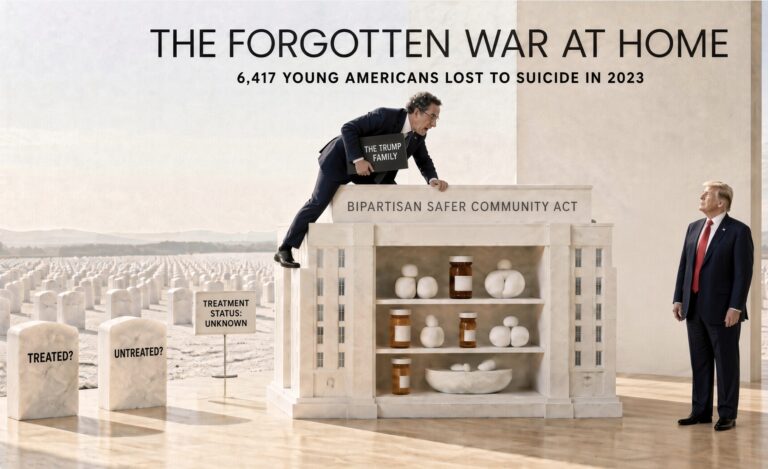
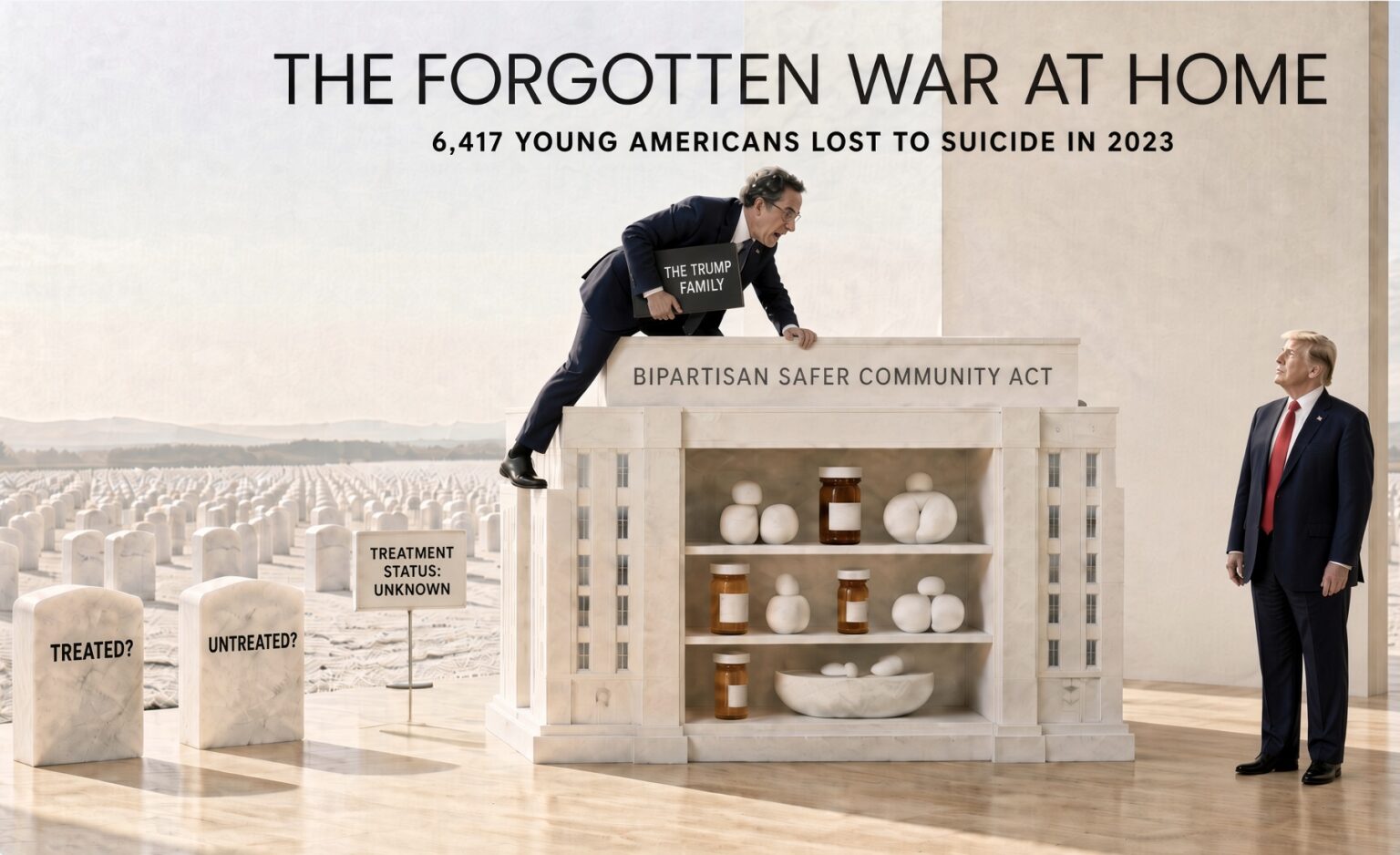
In 2023, 6,417 Americans ages 10–24 died by suicide, about 18 young people every day. That same year, the Defense Department recorded zero U.S. active-duty military deaths from hostile action. The contrast exposes a devastating home-front death toll. Thousands of young Americans are dying here, and Washington should respond with the urgency, investigation, and accountability it would demand if those losses were occurring on a battlefield.
If soldiers repeatedly died crossing the same stretch of ground, commanders would investigate for land mines before sending the next unit through. They would identify the danger and change course. Congress should demand that same determination from the behavioral-health system it funds: establish who received treatment, what drugs were prescribed, what changed before death, and what toxicology revealed.
The government’s documented testing gaps leave too much of that terrain unexamined. Both parties should demand the evidence needed to identify preventable hazards, not continue financing expansion without a complete accounting of the losses.
Congressman Jamie Raskin brought a prosecutor’s determination to President Trump’s second impeachment trial. Americans deserve that same determination directed toward the government-funded behavioral-health system his family trusted before his son Tommy died by suicide at 25.
“So he had good doctors, and he had medication,” Raskin told NPR. He described treatment as “a radically imperfect process, as anybody will tell you who’s been through that.” There was, he said, “a constant effort to adjust the medication” to address Tommy’s depression.
Good doctors. Psychiatric drugs. Constant adjustments. Then a young man dead.
“Radically imperfect” is an acknowledgment not an investigation. And “as anybody will tell you who’s been through that” can sound dismissive of the uncertainty parents need explained before entrusting their children to treatment. Familiarity with a system’s limitations does not make those limitations acceptable.
Parents deserve more than an invitation to understand. They deserve answers.
In fiscal year 2023, Congress provided SAMHSA approximately $7.37 billion for mental health and substance-use programs. That represents one federal agency, not the government’s entire behavioral-health investment. Billions in public funding should purchase rigorous scrutiny of outcomes not merely an expanding count of services delivered.
Yet the government’s own records reveal enormous gaps.
The CDC’s October 2026 report on violent deaths in 2023 shows that only 29.6% of people who died by suicide in its reporting system were tested for antidepressants. Only 24.4% were tested for antipsychotics. Among those tested for antidepressants, 32.2% tested positive. Those findings describe the tested subset, not all suicide deaths.
Untested does not mean unmedicated.
The CDC acknowledges inconsistent toxicology practices across jurisdictions. Its violent-death reporting system does not collect quantitative drug concentrations other than alcohol. Congress is financing behavioral-health services without a comprehensive national accounting of psychiatric-drug blood levels at suicide deaths.
FDA-approved antidepressant labeling already warns of increased suicidal thoughts and behaviors in pediatric and young adult patients in short-term studies. The identified increase applies to patients age 24 and younger, with close monitoring urged early in treatment and when doses change.
Tommy was 25, and Raskin’s interview does not identify his medications or doses. Those missing details make records essential. His description of constant adjustments should prompt questions about what changed, what was observed, and how clinicians responded.
Every suicide investigation should establish treatment history, drug exposure, combinations, dose changes, discontinuation, and reported behavioral changes. Toxicology requires measured levels to expose any psychiatric drugs in the blood system. That calls for competent forensic work, not leaving exposure undocumented.
National reporting should distinguish verified medication exposure, verified non-exposure, treatment without medication, and unknown status. Meaningful comparisons must account for the underlying treatment not blaming the psychiatric label placed onto the person seeking help. Otherwise, neither treatment’s benefits nor its harms can be evaluated honestly.
That obligation belongs wherever government purchases or promotes behavioral-health services, including schools and foster care.
Raskin knows how to demand records, challenge powerful institutions, and question assurances. The government-funded behavioral-health system deserves that same scrutiny.
“He had good doctors, and he had medication” should open the inquiry—not close it.
Congress must require the testing, obtain the treatment histories, and demand independent answers. Defeating the other party is not a substitute for protecting the next generation.
AbleChild is a 501(c)(3) nonprofit organization that has recently co-written landmark legislation in Tennessee, setting a national precedent for transparency and accountability in the intersection of mental health, pharmaceutical practices, and public safety.
What you can do. Sign the Petition calling for federal hearings!
Donate! Every dollar you give is a powerful statement, a resounding declaration that the struggles of these families will no longer be ignored. Your generosity today will echo through generations, ensuring that the rights and well-being of children are fiercely guarded. Don’t let another family navigate this journey alone.
Donate now and join us in creating a world where every child’s mind is nurtured, respected, and given the opportunity to thrive. As a 501(c)3 organization, your donation to AbleChild is not only an investment in the well-being of vulnerable children but also a tax-deductible contribution to a cause that transcends individual lives.