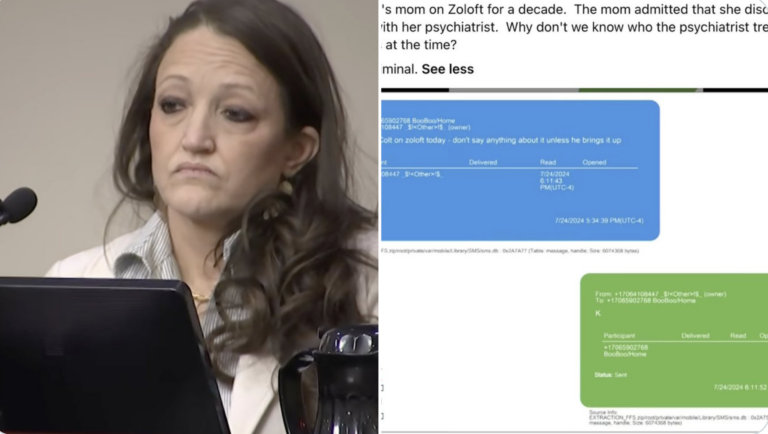

AbleChild has long warned that behind many acts of violence sits a protected circle of behavioral health providers and state partners who face almost no public accountability. In Parkland, Henderson Behavioral Health treated Nikolas Cruz for years with state funding yet saw its records sealed and its role effectively shielded after the massacre. In Butler, alleged Trump shooter Thomas Matthew Crooks was quickly branded disturbed while the behavioral health company employing his licensed‑counselor parents remains undisclosed. In Utah, accused assassin Tyler Robinson’s mother, Amber Robinson, works for Intermountain Support Coordination Services, LLC a state‑funded behavioral health provider with a large public contract.
Is this yet another million‑dollar behavioral health player operating in the background, protected by nondisclosure and fragmented oversight? Meanwhile the public is told to look only at the “lone” attacker and never at the hidden relationships that may contribute to access and large scale national security issues?
These same questions arise in the investigation of the alleged would-be assassin, Cole Allen. The media reports that Allen worked for C2 Education, a national tutoring and test prep company, and that he has an engineering background, including studies and work that show strong technical skills. C2 Education is owned by Serent Capital, a private equity firm that invests in education, health care, software, and services.
Serent’s portfolio includes another company that matters for AbleChild’s long time focus on behavioral health systems. In March 2026, Serent announced an investment in Saisystems Health, a healthcare technology and services company in Shelton, Connecticut. Saisystems Health provides billing and electronic health record systems for doctors who work in skilled nursing facilities and in long term or post care settings where psychiatric and behavioral health conditions are common and treated as part of routine care.
C2 Education and Saisystems Health are different companies, but they have the same private equity owner, Serent Capital. C2 is the tutoring company where Allen reportedly worked. Saisystems is a health tech company that runs record and care management systems in facilities and also is involved in government work, including services tied to the Navy and maritime technology. The overlap is that they sit in the same broad environment of education, health tech, and government linked contracts. Could this be a loophole worth investigating?
Given Allen’s technical background, is it possible that the Mechanical Engineer enjoyed other employment under the Saisystems umbrella? It is reasonable to ask whether the accused would be assassin had roles, access, or exposure to systems across these related companies that have not yet been examined.
Saisystems Health is a division of SAI Systems International, Inc., which has subcontracted on U.S. Navy submarine programs. Saisystems Health itself is not a Navy contractor, but it is indirectly tied to Navy work through its parent company. This raises concerns that the behavioral‑health division could be used as a back door for bad actors to reach Navy systems or information. The Navy‑related work is attributed to “SAI Systems International, Inc.” as the subcontractor, while “Saisystems Health” appears as one of several branded divisions under the same Shelton‑based corporate entity. The stakes are high for the United States as well as human rights, these relationships must be explored in these mass violence cases.
This is not about one company or one person. It is about a pattern. When the same types of systems, private equity firms, behavioral health providers, healthcare technology companies, and government linked contractors, appear around vulnerable individuals and major acts of violence, those connections must be examined. These are not distant or random links. They represent potential lines of access, influence, and system level failure that are often left out of public investigations.
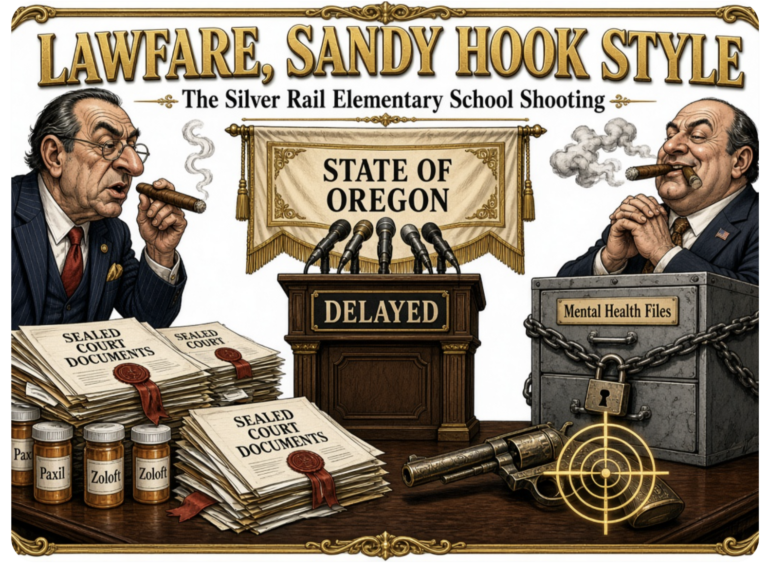
Public messaging often shuts down these questions before they begin. Within hours of the White House Correspondents Dinner shooting, the suspect was labeled a depraved crazy person. Terms like crazy, mentally ill, or lone actor quickly narrow the narrative and shift focus away from treatment history, psychotropic drugs, institutional involvement, and system level responsibility before any records are reviewed.
AbleChild’s work across multiple mass killings, assassination attempts points to the same underlying problem. Critical information is withheld, mishandled, or never fully examined. Basic forensic standards are broken. Key records are not released. Lines of inquiry that involve institutions are not pursued. While the public is left without answers, the same mass murders and targeted assassinations continue to occur and the public continues to be left in the dark.
Case after case of mass killings shows how private and government relationships can hamper or derail investigations. At the same time, the behavioral health industry appears repeatedly in major acts of violence, including all the assassination attempts on President Trump and the assassination of Charlie Kirk involving the State of Utah. These connections are not being fully examined.
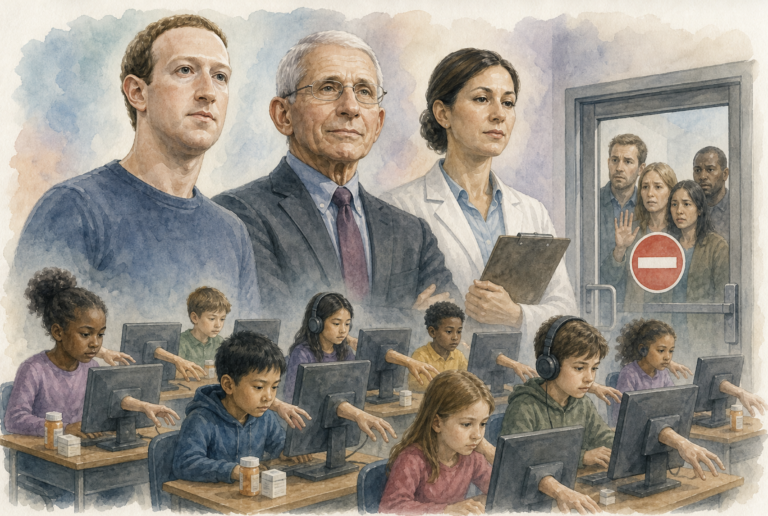
The behavioral health system sits at the center of this pattern. In schools and foster care, vulnerable children are often placed on powerful combinations of psychotropic drugs at much higher rates than other children. These decisions are often made with limited independent review of risks, outcomes, or financial incentives. Billions of taxpayer dollars flow through public private behavioral health systems, yet oversight is often handled by the same entities that benefit from the funding.
This creates a closed system. The same institutions that provide treatment, receive funding, and shape public narratives are often the entities that would need to be investigated when something goes wrong. As a result, accountability is limited, and deeper institutional questions remain unanswered. AbleChild has also reported on this pattern in Montana, where a behavioral health system overhaul raised concerns about outsourcing and connections to Chinese linked business interests.
In this investigation, those same concerns apply. The connection between a private equity network, a tutoring company, a health tech firm involved in institutional care, and government linked contracts raises questions that go beyond a single job. It raises questions about access, oversight, and whether multiple systems intersected in ways that have not yet been disclosed.
At a minimum, investigators should compel full discovery into the companies tied to Serent Capital, including personnel records, contractor relationships, and internal communications. The goal is to determine whether anyone in this shared corporate environment had contact with, knowledge of, or any connection to the alleged shooter, and whether any system level failures or overlaps played a role.
Billions in taxpayer dollars now flow through private equity-owned behavioral health and defense companies, yet their role in repeated mass violence goes largely unexamined. With the nation at war and an educational system in long‑term decline, the public is poorly equipped to challenge the narratives crafted after each attack. When autopsies, mental health files, and ballistic reports are sealed, are these same corporate players driving a script that reliably ends in demands for more “mental health crisis” funding and expanded defense budgets while their own contracts grow and their failures stay hidden? At this point, asking whether these firms and their government partners have conflicts of interest or incentives that deepen, rather than prevent, violence is not optional; it is a national security requirement.
AbleChild is a 501(3) C nonprofit organization that has recently co-written landmark legislation in Tennessee, setting a national precedent for transparency and accountability in the intersection of mental health, pharmaceutical practices, and public safety.
What you can do. Sign the Petition calling for federal hearings!
Donate! Every dollar you give is a powerful statement, a resounding declaration that the struggles of these families will no longer be ignored. Your generosity today will echo through generations, ensuring that the rights and well-being of children are fiercely guarded. Don’t let another family navigate this journey alone. Donate now and join us in creating a world where every child’s mind is nurtured, respected, and given the opportunity to thrive. As a 501(c)3 organization, your donation to AbleChild is not only an investment in the well-being of vulnerable children but also a tax-deductible contribution to a cause that transcends individual lives.