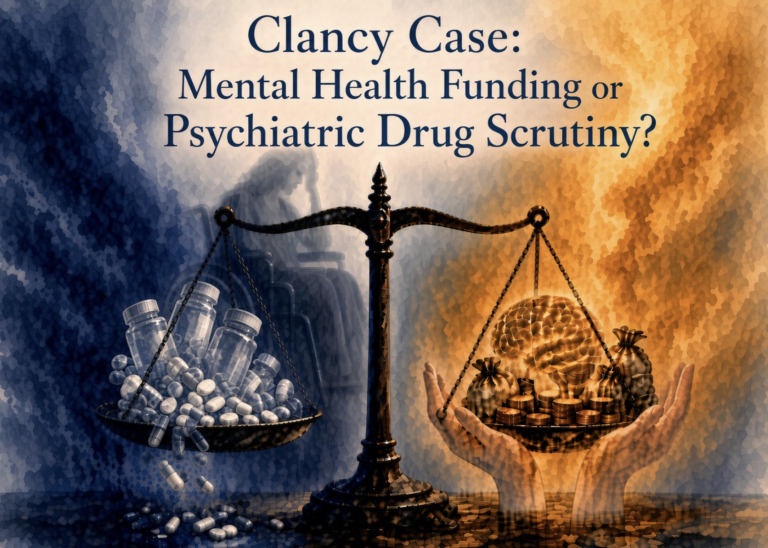

The Daily Mail’s article today about Charlie Kirk’s accused assassin, Tyler Robinson, is that The accused killer’s defense team has “enlisted” “mercy investigators” to help dodge the death penalty. Robinson’s “mercy team” exists because Utah taxpayers are legally obligated to fund a capital defense, with additional help potentially coming from the same professional networks and advocacy circles that move money and expertise around every high‑profile case.
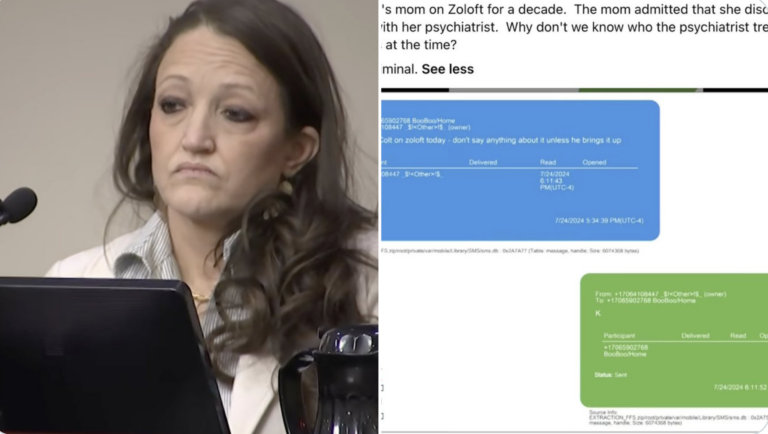
The article does not explain that there is no public record yet made available of Tyler Robinson’s mental‑health background or any direct connection to state mental health providers, beyond the fact that Robinson’s mother worked for Intermountain Care Coordination, LLC, a state‑linked contractor that matched individuals with health care providers through Utah’s Medicaid system. The silence about Robinson’s mental health matters.
The Daily Mail is using the notoriety of Robinson’s defense team in the same way that the truth was buried in the sentencing hearing of Parkland Florida Marjory Stoneman Douglas High School shooter, Nickolas Cruz – focus on a “mercy” defense team and ignore the state’s culpability in creating and managing the deadly behavior.
After Cruz murdered and was sentenced for the death of 17 people at Marjory Stoneman Douglas High School, the public now is being told Cruz escaped execution because a brilliant defense team sold jurors on fetal alcohol spectrum disorder, a story that does more to protect a corrupt public‑defender system and its cozy relationship with the state than to describe what actually happened in that courtroom.
That story is media‑friendly, emotionally tidy, and deeply misleading. It is also not the way the jurors’ decision should be spun, despite how confidently that narrative is pushed in articles after the fact. It does not reflect what jurors learned during the sentencing hearing, which was years of Cruz’s psychiatric treatment, repeated medication management beginning in childhood, and a child whose behavior was being controlled by professionals long before the shooting.
Inside that courtroom, jurors did not see a boy denied care. They saw a boy saturated in it. The sentencing hearing showed that Cruz began at age 6 on cocktails of psychiatric drugs and then passed through state providers, psychiatrists, and other mental‑health professionals for years. After years of psychiatrists, repeated failures of behavioral oversight, calls to the family home, and glaring red flags that were ignored, jurors were left with a devastating picture: this was not a child with no services, but a child engulfed by services that were plainly not working. This was not the story of a boy abandoned by the system. It was the story of a boy processed by it.
Against that record, the fetal alcohol narrative was cosmetic. You cannot ask a juror to believe the state deserves to kill someone because his brain was damaged before birth while ignoring how the system damaged that brain after birth through years of psychiatric control, failed oversight, and missed intervention. Henderson Behavioral Health was among the providers involved in evaluating and managing Cruz, including crisis contacts in 2016, and Henderson later denied responsibility for his actions. Henderson Behavioral Health was paid to manage Cruz’s risk, and Henderson failed. Henderson also enjoyed liability protections with the State’s help.
The “fetal alcohol saved him” line is total garbage…misleading and utterly false. This was not a triumph of prenatal diagnosis, and it was not some elegant courtroom victory by a clever defense team. What made execution impossible for at least some jurors was the brutal reality of years of psychiatric drugging, revolving‑door providers, inconsistent medical monitoring, and institutional failure laid out in the sentencing hearing itself. That reality should also force tougher questions in the Robinson’s case: why do these “mercy” defense teams and mitigation specialists keep appearing around the same high‑profile mass killings and assassinations, without anyone asking what role their profession played in refusing to hold to the facts of the case and expose the clear conflicts of interest in the government’s relationship with mental health providers?
Florida’s political response made clear what mattered most. Lawmakers did not launch a forensic public examination of Cruz’s medication history or demand accountability from those who provided Cruz’s treatment. Instead, Florida changed its death‑penalty law so a unanimous jury would no longer be required to impose death, a change widely linked to outrage over the Cruz verdict. The state did not fix the system that failed Cruz; it weakened the jurors who refused to ignore that failure.
Now the same script is being written around Tyler Robinson, and the Daily Mail is helping write it. Its coverage lingers over Robinson’s “mercy team,” claiming he has “enlisted” a team of “mercy investigators” to help him dodge the death penalty, as if this were his personal hiring decision. In reality, those lawyers and mitigation specialists are court‑appointed capital defenders funded by Utah taxpayers.
What the article does not do is ask hard questions about Robinson’s psychiatric history. Did any school evaluate Tyler Robinson for behavioral or emotional problems? Was he ever given a diagnosis or psychiatric medication? Were there incidents or behavioral changes tied to treatment, crisis intervention, or mental‑health services?
Tyler Robinson’s mother, Amber Robinson, worked for Intermountain Support Coordination Services, which matched individuals with health care providers through Utah’s Medicaid system. That makes the absence of deeper scrutiny more striking, because the public still does not have a clear, evidence‑based account of what professional systems and state‑funded provider networks surrounded Robinson before this case erupted.
If Robinson’s history includes the same kind of psychiatric and institutional footprint that appeared in the Nikolas Cruz case, then there were teams around him long before a rifle was ever raised. There were school personnel, clinicians, case managers, and behavioral‑health professionals with authority to label, monitor, refer, and intervene. By centering the post‑crime “mercy team,” the Daily Mail repeats the Parkland trick: it turns the people trying to stop an execution into the story, while the larger systems that may have shaped the defendant’s trajectory remain invisible.
The real question is why the media and political class reserve so much attention for lawyers and mitigation specialists at the end, while refusing to investigate the psychiatric and governmental systems that handle these young men at the beginning. Parkland already showed what happens when jurors are forced to confront that record honestly. If the Robinson case is going to be covered responsibly, that same scrutiny has to start now.
A state that saturates kids in psychiatric drugs, misses or buries escalating red flags, and then demands the right to kill them when everything explodes is not delivering justice. It is covering its tracks. The “mercy defense teams” we need to hear about are not just those fighting for life at sentencing, but those who held power over these boys when it still might have mattered. Until those teams are dragged into the center of the story, every high‑profile shooting and assassination will end the same way: another neat explanation, another scapegoated “mercy” effort, and another opportunity to ignore what the psychiatric system is doing to these children.
AbleChild is a 501(3) C nonprofit organization that has recently co-written landmark legislation in Tennessee, setting a national precedent for transparency and accountability in the intersection of mental health, pharmaceutical practices, and public safety.
What you can do. Sign the Petition calling for federal hearings!
Donate! Every dollar you give is a powerful statement, a resounding declaration that the struggles of these families will no longer be ignored. Your generosity today will echo through generations, ensuring that the rights and well-being of children are fiercely guarded. Don’t let another family navigate this journey alone. Donate now and join us in creating a world where every child’s mind is nurtured, respected, and given the opportunity to thrive. As a 501(c)3 organization, your donation to AbleChild is not only an investment in the well-being of vulnerable children but also a tax-deductible contribution to a cause that transcends individual lives.