
It seems like a week doesn’t go by that there isn’t some news account of a teacher being charged with sexually abusing a student. It’s not like it’s a new thing but does seem to happen much more frequently to the point of making one wonder why. What has changed of late that more teachers are stepping over that moral boundary? AbleChild can’t help but wonder if the increased use of psychiatric drugs is playing a part in this abuse of power and criminal behavior.
Just last month two cases came to light. First, 25-year-old Alexander High School teacher Maris Nichols in Atlanta, GA. was charged with one count of tampering with evidence, two counts of child molestation, four counts of improper sexual contact by an employee, and four counts of grooming of a minor. Nichols is accused of abusing at least six children and allegedly had sex with a student twice inside a schoolroom closet.
The second case involves 35-year-old Michelle Mercogliano a special education teacher at Conestoga High School in Tredyffrin Township, PA. Mercogliano is accused of having sex with a student about 12 times since February. Mercogliano is facing a long list of charges including institutional sexual assault and corruption of minors.
Educator sexual misconduct is a serious problem in the United States with the Department of Education reporting in 2004 that nearly 10 percent of K-12 students had experienced either verbal, visual or physical educator misconduct at some point during their school career. The report revealed at the time that men made up more than 80 percent of teacher sexual perpetrators but, as evidenced from the above, women make up a growing number of reported sexual abusers. It happens everywhere, including public, religious, independent and private schools reporting teacher/student sexual abuse.
According to a 2020 Department of Education report, 14,152 allegations of sexual assault occurred between 2017-2018 (defined as threatened rape, fondling, indecent liberties or child molestation). The same report revealed that during that same period, there were 768 allegations of rape or attempted rape (defined as forced sexual intercourse – vaginal, anal or oral). These data represent a 53 percent increase in alleged sexual abuse and a 99 percent increase for rape/attempted rape from 2015-2016. More destressing is that it is reported that only one percent of educator sexual misconduct cases is reported to police at the time of the abuse.
One must wonder what is going through an educator’s mind that allows even the slightest consideration of such a horrendous violation of a student. This, AbleChild believes, is where prescription psychiatric drugs may play a part in this ever-increasing number of teachers sexually abusing children. According to a study by the National Institutes of Health, based on independent regional studies, suggests significant psychiatric drug use among teachers where in 2026 twenty percent of teachers reported using psychotropic medications with nearly 17 percent taking antidepressants. Further, CDC data reveal that 1 in 6 American adults (16 percent) take antidepressants. Because 77% of K-12 teachers are female, one can conclude that psychiatric drug use is higher among female teachers and antidepressants come with numerous unintended side effects.
For example, antidepressant-induced emotional blunting (AIEB) is a reduction in the ability to experience emotions – positive or negative. This is a real thing. So, what if teachers who step over that moral line in the sand and commit these horrific sexual abuses on children are experiencing a side effect of prescribed medications? AIEB allegedly affects 40-60 percent of the patients who take antidepressants and they are experiencing an inability to feel happiness, enthusiasm, grief and sorrow, and they are disconnected from family, friends and partners and unable to feel empathy.
In other words, what if these teachers, like so many others who take antidepressants, are feeling nothing. They aren’t happy and they aren’t sad. They feel nothing. They’re numb. And if these teachers are feeling nothing then it makes sense that, well, anything goes…that everything they feel, even criminal activity, is fine.
Of course, this “numbing effect” is on top of the other known serious side effects of antidepressants that include, anxiety, confusion, difficulty with concentration, mood and behavior changes, abnormal dreams, memory impairment, emotional lability, personality disorder, abnormal thinking, delusions, antisocial reaction and depersonalization to name a few.
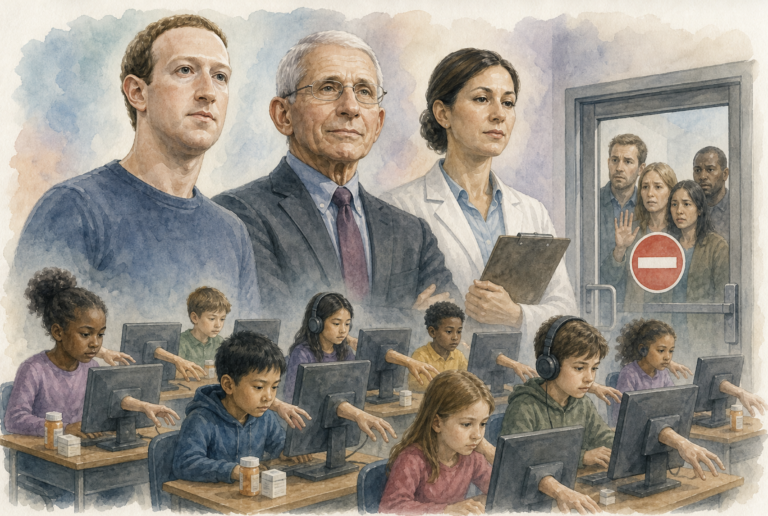
Then throw in the fact that children are being prescribed psychiatric drugs at record numbers and it’s easy to understand how children can be manipulated by those in a position of power. Based on information made public by IQVia (formerly IMS Health), the largest vendor of US physician prescribing data, in 2020 3.2 million 0–17-year-olds were prescribed ADHD drugs, nearly 1.2 million 0-17-year-olds prescribed antianxiety medications, more than 837 thousand 0–17-year-olds on antipsychotics and more than 2 million 0–17-year-olds prescribed antidepressants.
It’s a perfect storm. Children already dealing with mental health issues and mind-altering drugs, are being sexually abused in staggering numbers by teachers who may be suffering with mental health issues themselves and taking prescription psychiatric drugs. That there are few studies regarding this sick phenomenon is a scandal in and of itself. Someone, somewhere, must address what can only be described as a sexual abuse epidemic among our school-age children at the hands of those entrusted with their safety and education. There’s no guesswork here, we can all agree that this is not the education any child should be subjected to and it’s time to get to the bottom of why the abuse is happening.
AbleChild is a 501(3) C nonprofit organization that has recently co-written landmark legislation in Tennessee, setting a national precedent for transparency and accountability in the intersection of mental health, pharmaceutical practices, and public safety.
What you can do. Sign the Petition calling for federal hearings!
Donate! Every dollar you give is a powerful statement, a resounding declaration that the struggles of these families will no longer be ignored. Your generosity today will echo through generations, ensuring that the rights and well-being of children are fiercely guarded. Don’t let another family navigate this journey alone. Donate now and join us in creating a world where every child’s mind is nurtured, respected, and given the opportunity to thrive. As a 501(c)3 organization, your donation to AbleChild is not only an investment in the well-being of vulnerable children but also a tax-deductible contribution to a cause that transcends individual lives.