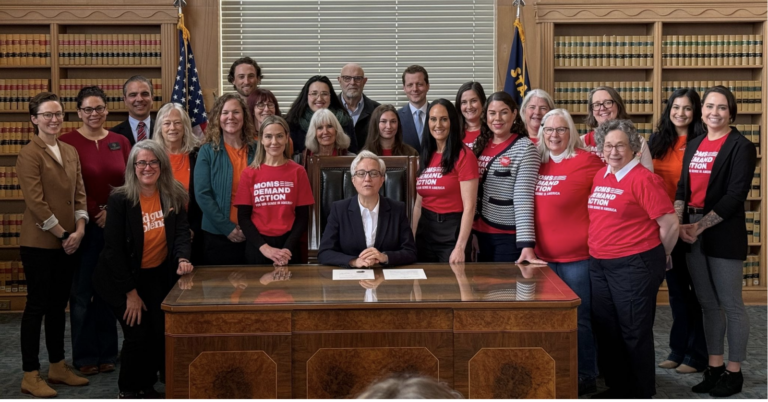
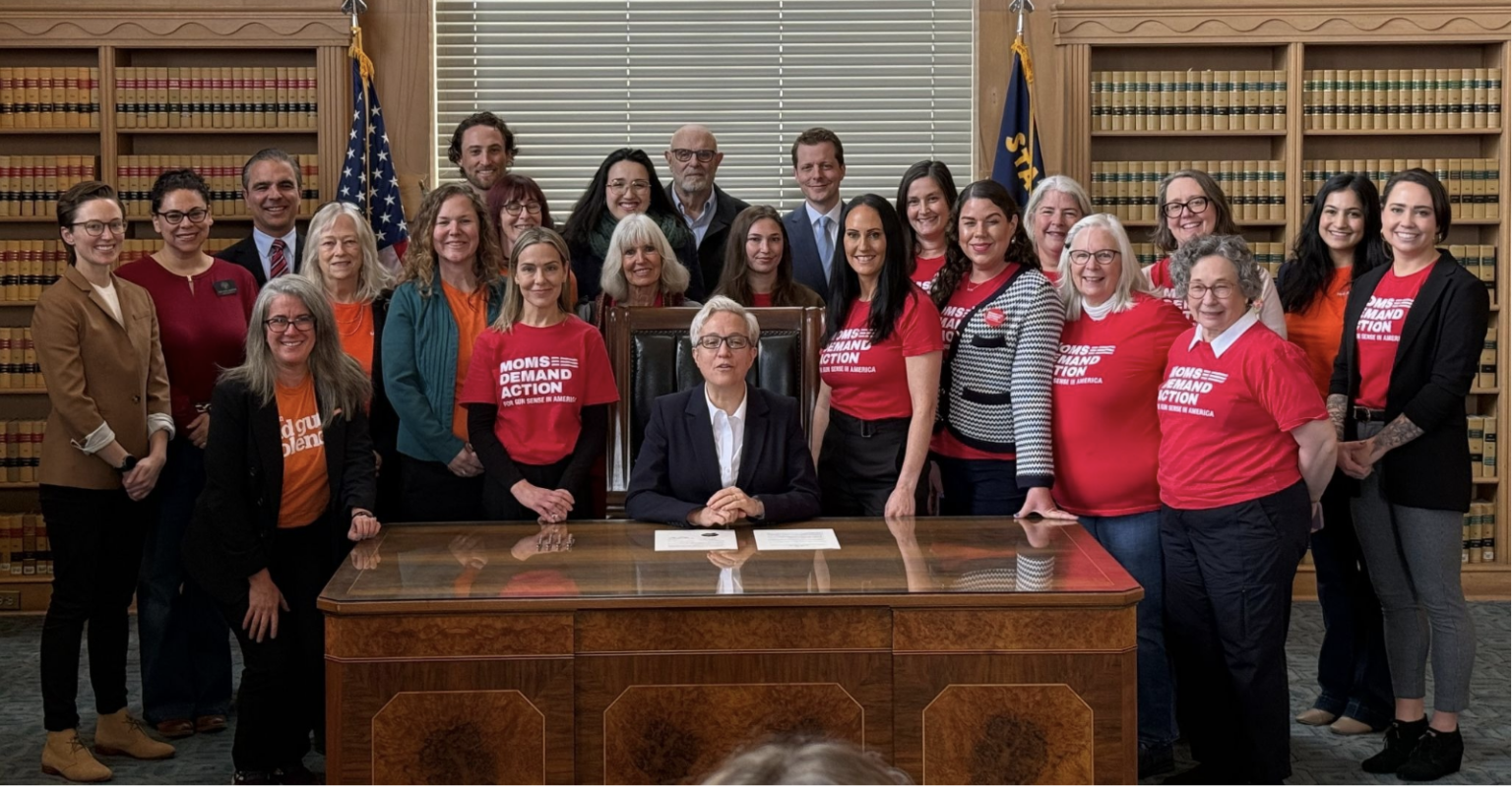
Oregon Governor Tina Kotek had a confident message when she celebrated the Community Safety Firearms Act in November 2025: “You all know that the data backs us up.” She also thanked Everytown for Gun Safety and Moms Demand Action for their “fierce advocacy.”
Nearly eleven months later, with the Democratic governor campaigning for reelection, three children and a teacher were killed at Silver Rail Elementary School in Bend. CNN placed the attack within a national school-shooting tally, drawing on Everytown, Education Week and the Gun Violence Archive the day of the killings.
The connection raises an accountability question: When an advocacy organization statistics help frame legislative messaging and news coverage, is the public receiving an explanation of violence or a numerical backdrop for a gun-control argument?
Counting shootings is not the same as identifying what would prevent them.
At the October 16 news conference, Bend Police Chief Mike Krantz said he would name the attacker only once! Early coverage nevertheless carried conflicting versions of the name before subsequent reports identified him as Griffin J. John II, 16, a former Silver Rail student.
An inaccurate identification creates an obstacle for journalists researching an attacker’s history. Limiting repetition makes a clear written identification more important, not less.
Another significant disclosure came from Bend-La Pine Schools Superintendent Steven Cook: the attacker had previously been a special-education student at Silver Rail. Officials also confirmed that the shooting occurred in a special-education classroom.
A 2025 education-journal article cites research finding that students in special education were four times more likely to be prescribed psychotropic medication than students in general education.
That supports not only asking about medication history but also systematically recording verified exposure, treatment changes and toxicology findings to help established motives. FDA antidepressant warnings identify an increased risk of suicidal thoughts and behavior in some young people, and medication guides flag new aggression or violent behavior as symptoms requiring immediate attention. These warnings warrant investigation and accurate data collection.
The chief should have explained whether investigators were obtaining and preserving relevant mental-health and prescription records, including any documented medication changes, and examining them alongside the physical evidence.
Krantz acknowledged the uncertainty surrounding the attack: “Everyone wants to know why, including us.… We may never get that full answer, but we want it.” Investigators continued examining motive and how the teenager obtained the weapon.
Krantz sounded defeated when the investigation had barely begun. He limited the naming of the attacker while basic identification became confused, and he left unanswered whether investigators were obtaining mental-health records, prescription histories and toxicology evidence. Before the public even knew what investigators had examined, the chief was already warning that the motive might never be understood. That was a staggering admission at a briefing that should have laid out how police intended to find answers.
News organizations reported that the shotgun used in the attack had been purchased by the teenager’s mother. NBC News, citing two senior law-enforcement officials, reported that she bought it around his birthday in August.
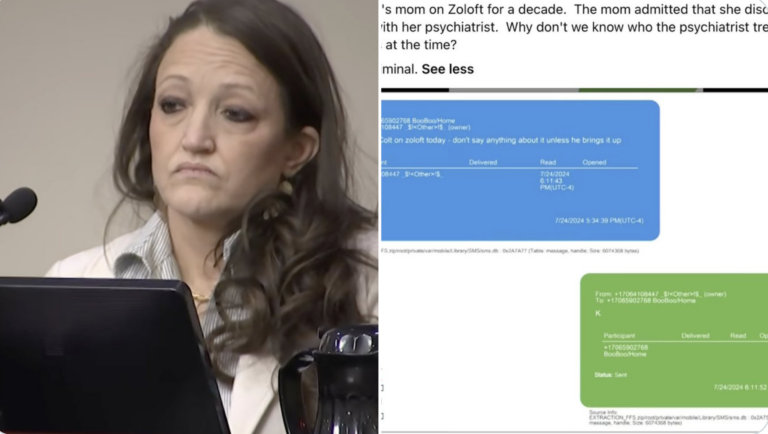
Reporters approached his mother, identified as Shauntai May Nickerson, at her apartment on Friday. She expressed sorrow and declined to explain how her son obtained the weapon. Police said they were still investigating his access to it.
CNN described Nickerson as a health aide at a local nursing home. A LinkedIn profile bearing her name lists her as a “Med Aide” at Touchmark Living Centers, Inc., in Bend, Oregon. The employment information is self-reported on the profile.
Police should have addressed the leaked information about the mother’s reported shotgun purchase at the briefing by confirming what investigators knew and correcting anything inaccurate. The misleading data on mass murders pushed on the day of the killings doesn’t help stop or prevent violence.
CNN’s tally measured shootings on school grounds, including parking lots, buses and accidental discharges that injured someone other than the shooter not just classroom massacres and mass killings. It is way to broad and completely lack mental health drugs.
Presented beside the Bend attack, that broad count pushes a guns-only explanation without examining psychiatric-drug exposure or treatment changes, variables Everytown’s public dataset does not systematically record. The tally counts gunfire; it cannot establish what caused it.
Everytown began tracking school gunfire in 2013, before Mayors Against Illegal Guns and Moms Demand Action combined under the Everytown banner in 2014, with Michael Bloomberg’s financial backing. Its database sits within an advocacy network that promotes gun restrictions and participates in political campaigns. It is not an independent government statistics agency.
In 2024, its charitable Support Fund, which maintains the database, reported $37.35 million in revenue, including $35.80 million in contributions. Its separate Action Fund reported $57.12 million. Those figures fund the organizations broadly; they do not establish the database’s cost or identify its specific donors.
CNN’s audience deserves to know that its statistical source belongs to a well-funded political advocacy network. Using a massacre to amplify Everytown’s statistics without explaining the limits of its data is unethical and risks obstructing prevention by directing attention away from factors the database does not examine.
“Today, we’re not just signing a bill. We’re saving lives,” Governor Kotek declared. But a shooting tally cannot substantiate that promise. Presenting incomplete incident data as proof of causes or solutions is misleading and risks leaving preventable dangers unexamined while the death toll continues. Cover Story Photo Credit.
AbleChild is a 501(c)(3) nonprofit organization that has recently co-written landmark legislation in Tennessee, setting a national precedent for transparency and accountability in the intersection of mental health, pharmaceutical practices, and public safety.
What you can do. Sign the Petition calling for federal hearings!
Donate! Every dollar you give is a powerful statement, a resounding declaration that the struggles of these families will no longer be ignored. Your generosity today will echo through generations, ensuring that the rights and well-being of children are fiercely guarded. Don’t let another family navigate this journey alone.
Donate now and join us in creating a world where every child’s mind is nurtured, respected, and given the opportunity to thrive. As a 501(c)3 organization, your donation to AbleChild is not only an investment in the well-being of vulnerable children but also a tax-deductible contribution to a cause that transcends individual lives.