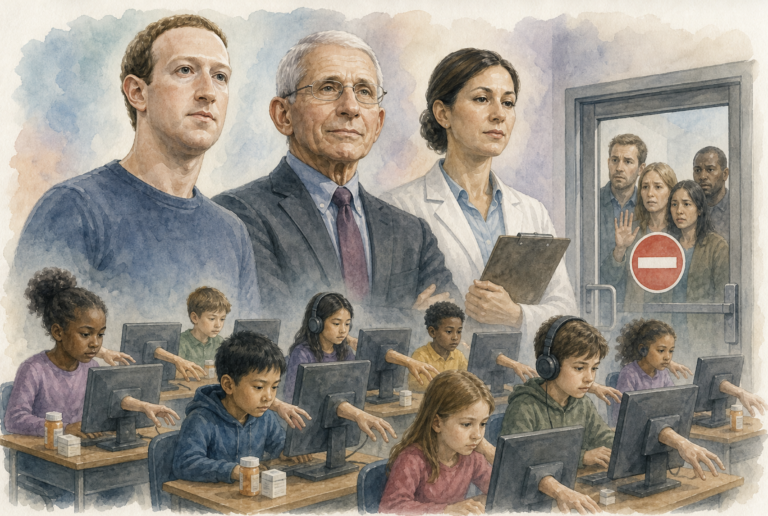

The federal government plans to use Rachel Orr to challenge Brian Cole Jr.’s autism diagnosis. Of all the experts, why Rachel Orr? One of the most interesting positions in her background is her donor-family work at the Lieber Institute for Brain Development. Its African Ancestry Neuroscience Research Initiative studies brain biology and genomic information from people of African ancestry, with $1.25 million committed by Maryland and $1 million from Brown Capital Management, and a separate $1 million Chan Zuckerberg Initiative grant. Lieber also has a funding-and-technology relationship with Amazon Web Services.
That background brings informed consent into focus. Orr’s published role involved prospective brain-donor families and interviews with donating families. Now Orr reportedly disputes a diagnosis assigned to a defendant in a major federal prosecution. What were donor families told about the diagnoses researchers study?
Reporting places Cole’s autism diagnosis after his arrest and during the formal interrogation process. But when was the original diagnosis made and what was presented to Cole and his parents? Were the assessment’s limits explained? Were other explanations considered? What paperwork records their understanding? Do his parents have documentation from any government institution acknowledging, accepting, or participating in the diagnosis?
The CDC states that autism has no diagnostic medical test, such as a blood test. Assessment relies on developmental history and behavior. What certainty was presented to the family, and what uncertainty was disclosed?
If a government agency previously accepted Cole’s diagnosis, or actually participated in making it, those records would be especially interesting and relevant to understanding the government’s current position. Who was involved? What did the agency accept, and on what evidence?
That history matters before a diagnosis becomes a weapon in a contest between experts. One evaluator supplies the diagnosis. Another disputes it. Each side argues for its preferred interpretation. Diagnostic ping-pong—with a human being in the middle.
The questions extend to Cole’s police interview. What does the recording show about his ability to understand complex questions, his rights, and the consequences of answering?
In a federal investigation of this importance, how quickly did the government obtain his records, including his educational and treatment history? Were relevant records available within hours? What did investigators know before questioning began, and what information has reached the defense?
The same questions deserve attention in investigations of mass shootings and assassination attempts. What records did authorities obtain? Which remain outside public view? Without access to relevant information, how can the defense investigate possible treatment failures or institutional abuse? How can the public examine the institutions involved?
The interrogation risks are straightforward. Some people struggle to understand legal warnings or complicated questions. Under pressure, they may agree simply to end the interview or give the answer they think an officer wants. Even researchers writing in a forensic psychiatry journal have acknowledged this problem. Research identifies these dangers among people with cognitive disabilities and certain psychiatric conditions. A clear-sounding answer does not necessarily show clear understanding.
Another paper on interviewing and interrogation addresses comprehension, suggestibility, and the risks involved in questioning vulnerable suspects. What does the behavioral-health industry’s role in shaping these practices mean for the people being questioned?
For someone who has spent much of life receiving behavioral-health services, what additional questions should investigators ask? What diagnoses and treatments shaped that history? Was the person distressed, exhausted, confused, or experiencing medication effects during questioning? A long treatment history demands scrutiny of the industry, not just the person. Why is this billion-dollar industry allowed to dominate both the prosecution and the defense?
The interrogation of Parkland shooter Nikolas Cruz shows why the questions themselves matter. When Cruz described a voice or “demon,” Detective John Curcio told him he could have stopped it with marijuana or Xanax and asserted that Cruz “didn’t want to stop” it. The detective supplied claims about treatment and motive. Whose explanation was taking shape?
This comparison does not place Cole in the category of a mass killer. It asks how treatment histories, medication claims, and an interrogator’s interpretations become part of the account later presented as evidence.
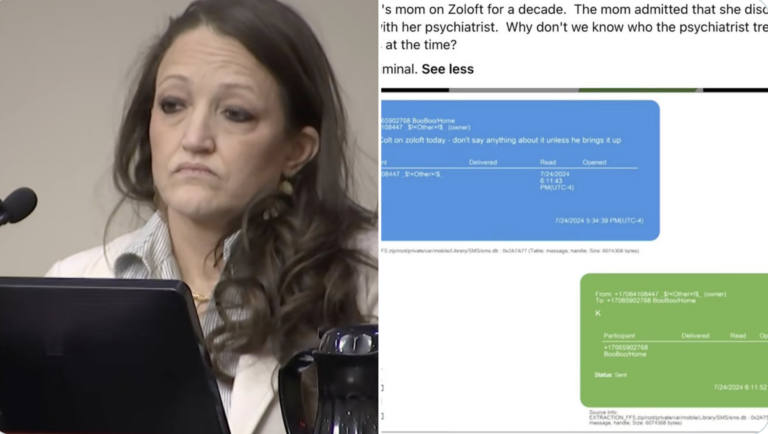
Lindsay Clancy’s case raises another part of the problem. Experts disagreed over psychosis, depression, bipolar disorder, and criminal responsibility. Were treatment decisions and possible medication effects examined as closely as her conduct? What scrutiny did the institutions providing Clancy’s care receive? The Christopher Pittman case “termed” (the Zoloft defense) illustrates the growing number of product liability issues embedded in the criminal cases and the advertising influence big pharma has over the media’s coverage of the trial. But the most alarming aspect overlooked is the direct roll “experts” from the powerful behavioral health industry play in the case itself.
These questions lead back to Orr. Her donor-facing work connects Orr to an institution conducting ancestry-focused brain research with government, Zuckerberg, and Amazon support. What did that role require Orr to explain about diagnosis, uncertainty, and consent? Orr’s background makes the choice of expert worth evaluating.
Cole is accused and must be presumed innocent. The issue reaches beyond stigma to power: who assigned the label, who challenged it, and whose account became authoritative? The government public/private funding relationships of behavioral health and big pharma are really worth the focus for the American people in order to protect human rights and rebuild the justice system.
AbleChild is a 501(c)(3) nonprofit organization that has recently co-written landmark legislation in Tennessee, setting a national precedent for transparency and accountability in the intersection of mental health, pharmaceutical practices, and public safety.
What you can do. Sign the Petition calling for federal hearings!
Donate! Every dollar you give is a powerful statement, a resounding declaration that the struggles of these families will no longer be ignored. Your generosity today will echo through generations, ensuring that the rights and well-being of children are fiercely guarded. Don’t let another family navigate this journey alone.
Donate now and join us in creating a world where every child’s mind is nurtured, respected, and given the opportunity to thrive. As a 501(c)3 organization, your donation to AbleChild is not only an investment in the well-being of vulnerable children but also a tax-deductible contribution to a cause that transcends individual lives.