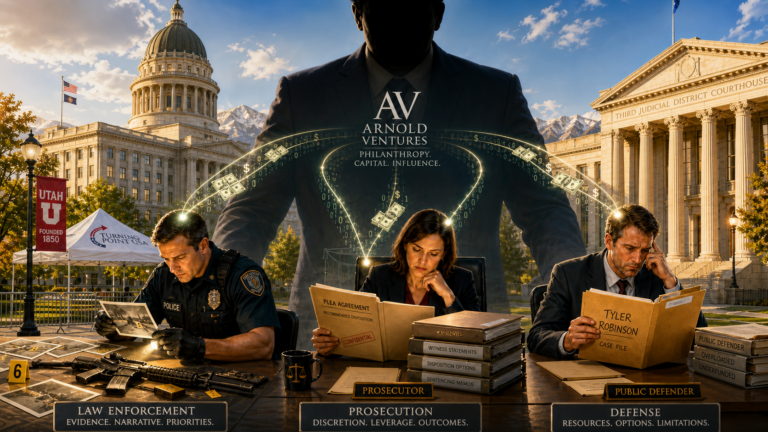
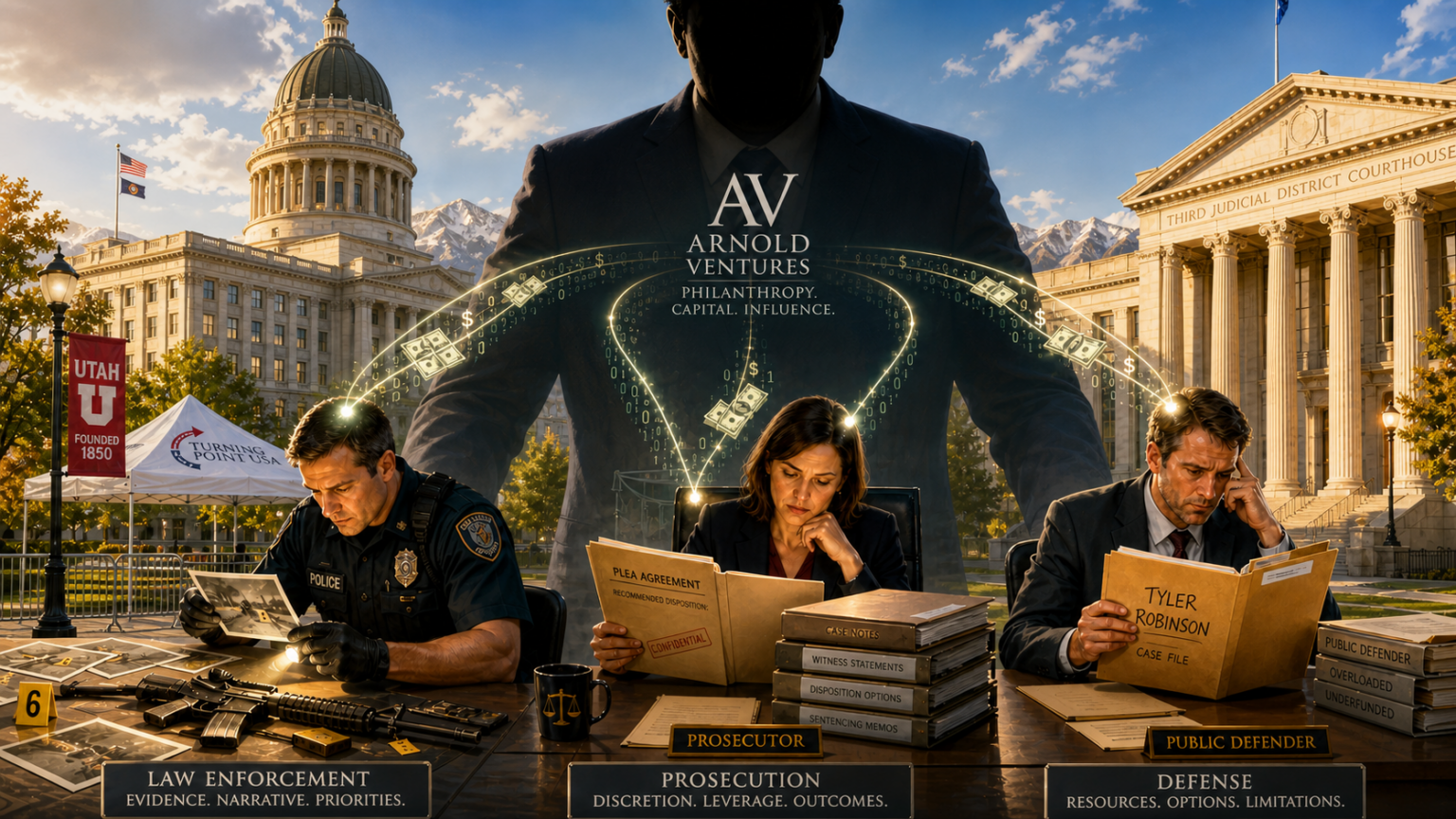
Arnold Ventures is not just another charity with good intentions. It is a billionaire‑run, political organization that has significant influence in Utah’s justice system and has intersected in all aspects of the Charlie Kirk Assassination.
Within a single year, Arnold Ventures met privately with Governor Spencer Cox, funded tools and response systems similar to those used in the investigation and later partnered with the state to reshape how violent crimes are solved. At the same time, it has supported research on plea deals and public defense, work that could directly affect how alleged assassin Tyler Robinson’s case is handled.
Arnold Ventures calls itself an “evidence‑based” philanthropy founded by billionaire and former Enron executive John Arnold and his wife, Laura. But the Venture’s reach goes far beyond simple charity. It operates across both sides of the justice system at a time when Utah is dealing with a high‑profile political assassination.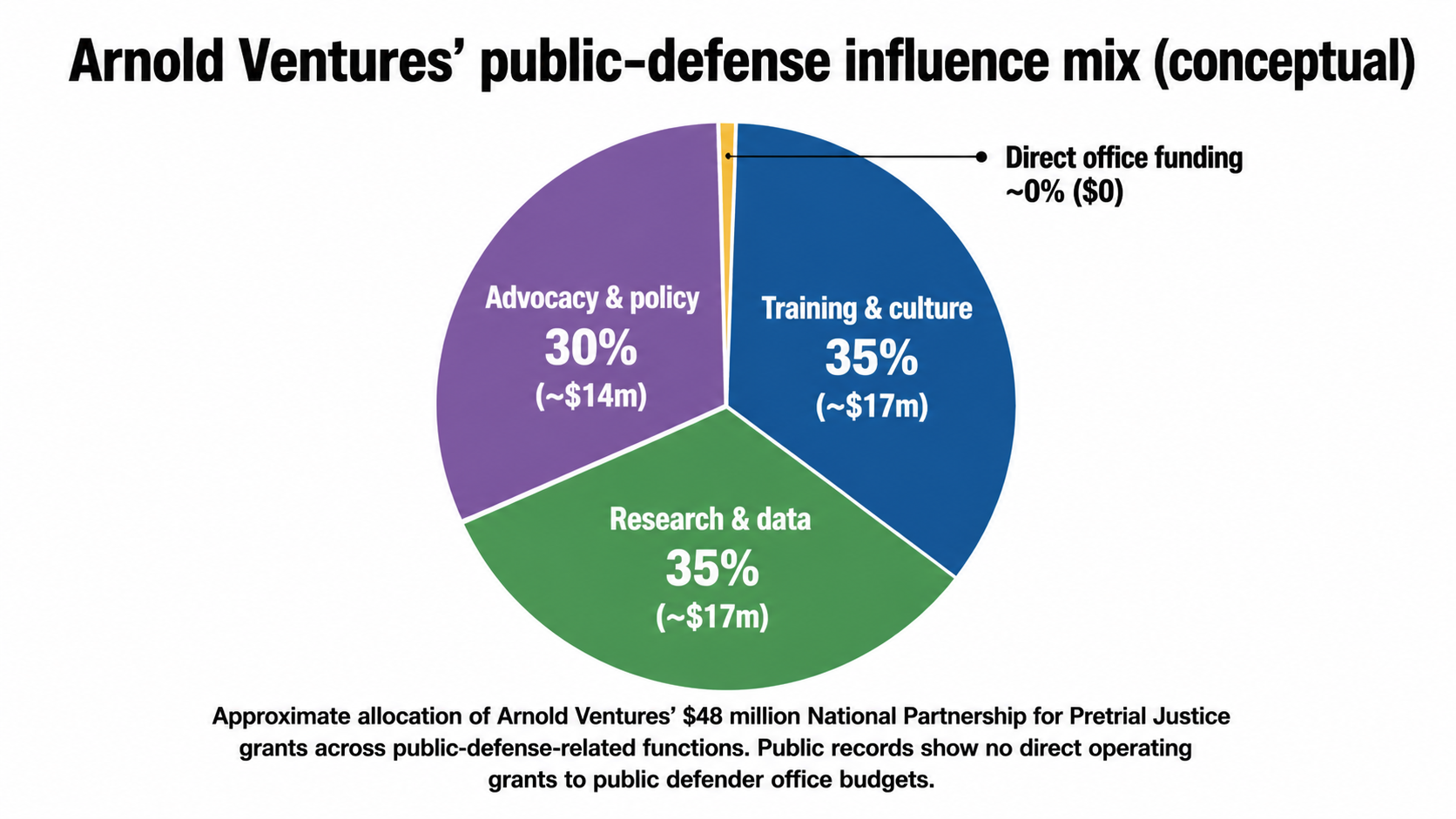
John Arnold came out of one of the worst corporate scandals in modern history: Enron. Arnold was a young star trader, making huge bets in the energy markets while the company’s books were being twisted by fraud. When Enron collapsed in 2001, thousands of employees lost jobs, retirement savings, and any sense of security. Arnold, however, walked away with a fortune, reportedly earning hundreds of millions of dollars before the crash and then moving on to run a hedge fund and build the “philanthropy” now known as Arnold Ventures.
Today, that fortune funds a different kind of power. The group provides grants for criminal‑justice reform, backing both law enforcement and public defense. On the surface, that may seem balanced. In practice, it means one private organization, through financial donations, is influencing police, prosecutors, and defense attorneys.
In early 2025, Arnold Ventures announced more than $15 million in criminal‑justice grants. That money supported police recruitment, investigative technology, and crisis‑response programs. At the same time, its Public Defense program funded research on how defense lawyers perform and case outcomes, while Laura Arnold urged states to fully fund public defenders just as they do police and prosecutors.
This raises a basic concern: one billionaire‑backed group is helping shape both how crimes are investigated and how defendants are represented. By mid‑2025, Arnold Ventures had already directed millions into tools for law enforcement and crisis response. Yet there is no clear public record showing which agencies in Utah received that money or how those tools are being used.
Reports on the Kirk case describe the same types of tools Arnold Ventures supports—advanced video analysis, forensic lab work, and structured response systems. It is not clear whether specific tools used in the investigation were funded by Arnold Ventures. But the group has openly said it invests in building and testing these systems across the country. That means Utah may be using tools shaped by private money, without the public knowing where that influence begins or ends.
The timeline adds more questions. On September 4, 2025, Governor Cox traveled to Washington, D.C. for a private meeting with John Arnold. Six days later, Charlie Kirk was killed at Utah Valley University. Cox later called it a political assassination.
At the same time, serious problems were reported in how the event and its aftermath were handled. A large campus event took place without an ambulance on site or a clear medical response plan. There have been concerns about how key evidence was handled during the autopsy. In the early hours after the shooting, the crime scene was not fully locked down. These failures raise questions about how the case was managed from the beginning.
Against that backdrop, the private meeting between the governor and a major justice‑system philanthropist becomes more than a calendar note. It is not known what was discussed, but the timing alone demands public scrutiny.
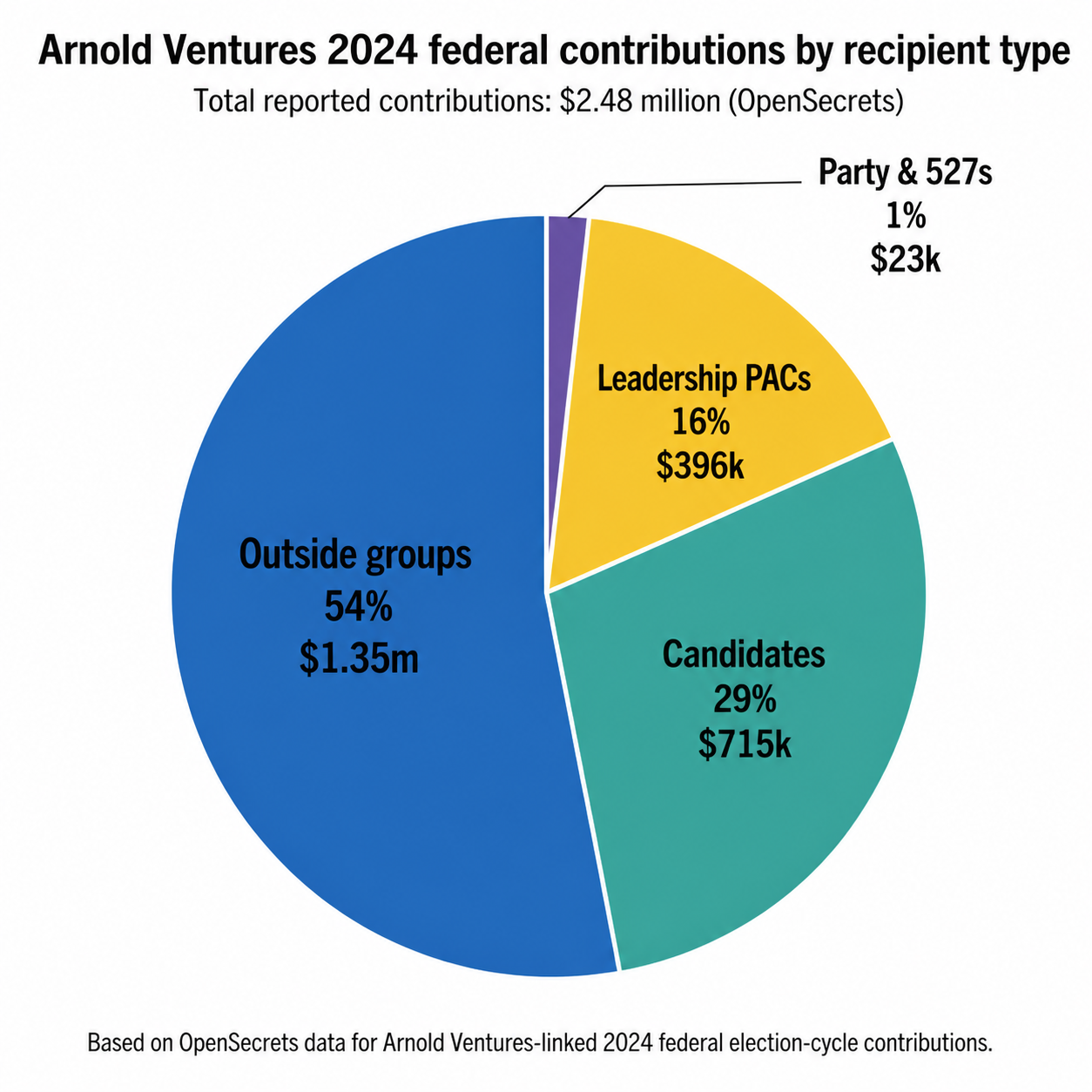
Soon after, Arnold Ventures moved into a formal partnership with Utah. Through H.B. 137, the Violent Crime Clearance Rate Fund, the state set aside $250,000 to help solve violent crimes. Arnold Ventures agreed to match that funding and joined Governor Cox and other officials at the bill signing. The group praised the legislation for providing police better tools and publicly thanked the Governor for backing increase.
The sequence is striking: a private meeting, followed by a public partnership, and then direct involvement in reshaping how violent crimes are handled. This raises a larger question about transparency and the role of private money in public policy.
Arnold Ventures also funds a plea‑bargaining research project through Duke Law that works with prosecutors in Provo, Utah. The project studies how charges are filed, how plea deals are reached, and how sentences are decided, some of the most important choices in any serious criminal case. At the same time, the group continues to shape how public defense systems are funded and evaluated.
Arnold Ventures’ role in Utah is not distant or abstract. It runs through the exact parts of the system now handling Tyler Robinson’s case. It affects how violent crimes are investigated and cleared, including the tools used to gather and interpret evidence. It reaches into prosecutors’ offices, where decisions about charges and plea deals are made. And it extends into the public‑defense system, where funding and performance are being reshaped.
This is not minor involvement. It is presence at every key stage: investigation, charging, negotiation, and defense—in the same system now deciding the outcome of a politically charged homicide.
It is already public that Charlie Kirk and Governor Cox had sharp political differences, and Cox himself called the killing a political assassination. When a private, billionaire‑funded group can meet with a governor, help fund crime policy, and influence how cases are handled, it raises a simple but serious question: who is shaping public policy, and on whose terms?
As Utah moves toward trial in the Kirk case, the system around the case deserves as much attention as the case itself. A private organization has touched the tools police use, the way prosecutors make decisions, and how defense systems operate, while also working with leaders who are changing those systems in real time.
That overlap may be coincidence, or it may mark a deeper shift in how public systems are steered. But without clear information about where that influence starts and ends, the public is left judging a justice process it cannot fully see.
The Kirk trial is serious and transparency is not optional; it is the foundation of trust. If that transparency is missing, the question is no longer just what happened in the Kirk trial, but who is shaping how justice is defined and delivered.
AbleChild is a 501(3) C nonprofit organization that has recently co-written landmark legislation in Tennessee, setting a national precedent for transparency and accountability in the intersection of mental health, pharmaceutical practices, and public safety.
What you can do. Sign the Petition calling for federal hearings!
Donate! Every dollar you give is a powerful statement, a resounding declaration that the struggles of these families will no longer be ignored. Your generosity today will echo through generations, ensuring that the rights and well-being of children are fiercely guarded. Don’t let another family navigate this journey alone. Donate now and join us in creating a world where every child’s mind is nurtured, respected, and given the opportunity to thrive. As a 501(c)3 organization, your donation to AbleChild is not only an investment in the well-being of vulnerable children but also a tax-deductible contribution to a cause that transcends individual lives.