
The White House, apparently under the leadership of Health and Human Services (HHS) Secretary, Bobby Kennedy, Jr., has signed an Executive Order (EO) which effectively removes any personal responsibility for any detrimental life decisions. It’s called the Great American Recovery Initiative which magically elevates addiction into disease.
But, if HHS Secretary Kennedy has taught the nation anything, it’s that saying something doesn’t necessarily make it so. For example, it was Kennedy, prior to becoming HHS Secretary, despite pronouncements by federal agencies and pharmaceutical giants that the Covid vaccines were safe and effective, who alerted the nation to the questionable efficacy and safety of the Covid vaccines.
The White House claims that nearly 47 million Americans or 16.8 percent of the nation’s population, suffer from addiction and the “recovery initiative” is about “a national effort to prioritize addiction treatment and recovery.” The White House EO initiative also announces that “addiction is a chronic, treatable disease.” And, in the same breath explains “the disease of addiction, also known as substance use disorder…” So, what is it? The White House is using two separate terms to define addiction in the same sentence. Is it a disorder or a disease? There’s a difference and it’s important.
According to the University of Pittsburgh Medical Center (UPMC) “in medical terminology, disease refers to a pathophysiological condition with identifiable causes, effects and outcomes.” On the other hand, the UPMC explains that a disorder “does not always have an identifiable cause and may not necessarily involve a clear-cut set of symptoms.” The UPMC concludes that “the key difference between a disorder and a disease is that disorders are often related to malfunctioning bodily or mental functions while diseases usually involve an underlying physical cause.”
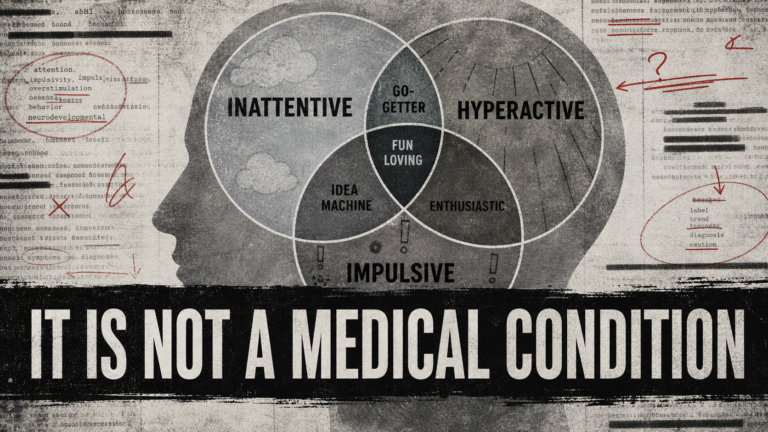
As an example of the differences between disease and disorder the UPMC explains that “attention deficit hyperactivity disorder (ADHD) is a neurological condition that affects an individual’s ability to focus and regulate behavior. It is a disorder because it causes disruptions in daily functioning but may not have an identifiable singular cause like an infection or injury. Disorders are also psychological, such as anxiety or mood disorders like depression.” In fact, there is no identifiable “treatable” abnormality that is any psychiatric disorder.
HHS Secretary Kennedy has never hidden his own personal experience with drug and alcohol addiction, and this may be the reason for his passionate support for assisting those who’ve experienced similar difficulties with substances of abuse. However, expanding the definition of disease to include every human frailty, certainly removes any personal responsibility for poor life choices and may create a nation of victims and, of course, says nothing about the cost of this well-intentioned treatment and recovery initiative.
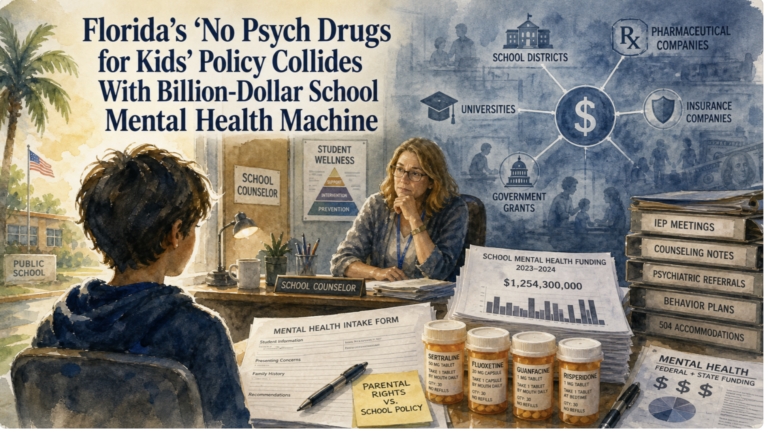
Currently the US taxpayers are the number one payer of substance abuse services through Medicaid. Recent data reveals that mental health care absorbed $58 billion of the Medicaid funding and $17 billion of that went directly to substance abuse programs. In fact, taxpayers fund enrollees with substance disorders at twice the rate of those without one – $1200 vs $550.
The details of how the HHS Secretary will pay for any new addiction “disease” services that make up the new substance abuse initiative have not been provided beyond “the order shall be implemented consistent with applicable law and subject to the availability of appropriations.” Given that the Trump administration is looking to reduce Medicaid spending, it will be of interest how Secretary Kennedy goes about Congressional dialing for dollars.
It is important to point out that the Mental Health Parity and Addiction Equity Act (MHPAEA) already mandates equal benefits for mental health disorders as medical and surgical benefits. And the point must be made that if mental disorders and addiction were diseases there would be no need for the Mental Health Parity Act.
Nevertheless, current federally funded mandates include Medication-Assisted Treatment, Detoxification, Counseling and Therapy, outpatient programs and Residential care. Further, federal law makes it mandatory that screening and intervention programs, support services and youth services be made available…even in schools.
Because there is no objective, confirmable abnormality that is any addiction, one has to wonder where the “disease” diagnosis will end. In other words, the medical profession can locate cancer from blood tests and CAT scans, and broken bones can be revealed by Xray’s. Addictions cannot be diagnosed by any objective test. So, how many other medically undiagnosable personal issues may fall under the “disease” umbrella?
More importantly, when HHS Secretary Kennedy talks about increased “treatment” and “recovery” services, one must ask if there will be any limitations to the financial burden placed on taxpayers? How many trips to treatment are allowable or is it endless payment for abuse and recovery, abuse and recovery. In other words, at what point will services end?
The current mental health model consists of diagnose and drug with no “treatment” plan that provides patients with any information about anticipated duration of drug “treatment” or anticipated outcomes and timeframes. The current mental health “treatment” consists of mind-altering drugs prescribed years on end.
AbleChild would suggest that, rather than argue over definitions of “disease” Secretary Kennedy provide an “Exit Plan” as part of this “new” initiative that many believe is simply enhanced mental health parity. The question that lawmakers may want to consider during funding discussions, though, is where does it stop?
Currently mental health disorders are one of the leading reasons for receiving disability benefits, accounting for one-third of all Social Security disability recipients in the US. Sixty percent of Supplemental Security Income (SSI) recipients under the age of 65 are diagnosed with a mental disorder and more than 50 percent of Generation Z (born 1997-2012) have mental disorders and are receiving long-term disability.
This “disease” thing is not only a slippery slope for personal accountability, but enormously expensive. Given that there is no abnormality that is actually targeted for “treatment” lawmakers may ask of the HHS Secretary what human frailty won’t be considered a disease, certainly leaving a nation of victims.
Be the Voice for the Voiceless
AbleChild is a 501(3) C nonprofit organization that has recently co-written landmark legislation in Tennessee, setting a national precedent for transparency and accountability in the intersection of mental health, pharmaceutical practices, and public safety.
What you can do. Sign the Petition calling for federal hearings!
Donate! Every dollar you give is a powerful statement, a resounding declaration that the struggles of these families will no longer be ignored. Your generosity today will echo through generations, ensuring that the rights and well-being of children are fiercely guarded. Don’t let another family navigate this journey alone. Donate now and join us in creating a world where every child’s mind is nurtured, respected, and given the opportunity to thrive. As a 501(c)3 organization, your donation to AbleChild is not only an investment in the well-being of vulnerable children but also a tax-deductible contribution to a cause that transcends individual lives.
AbleChild 25th Anniversary Event March 2026 visit AbleChild25.com