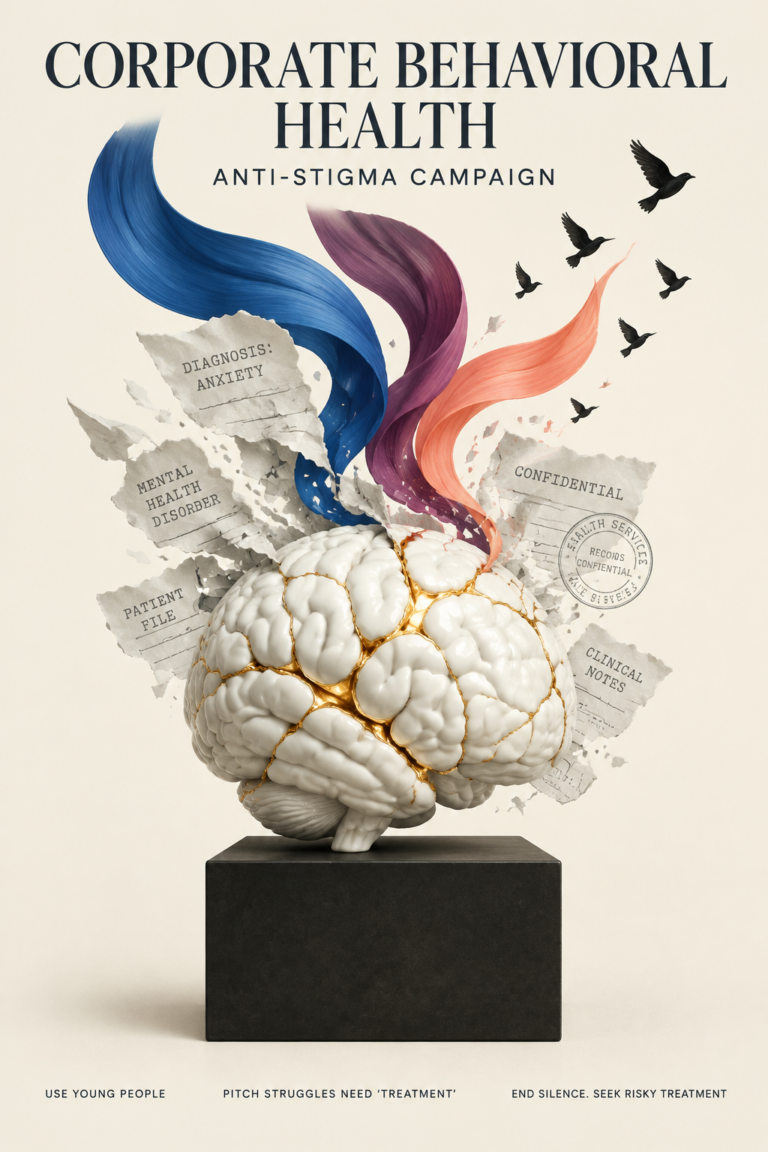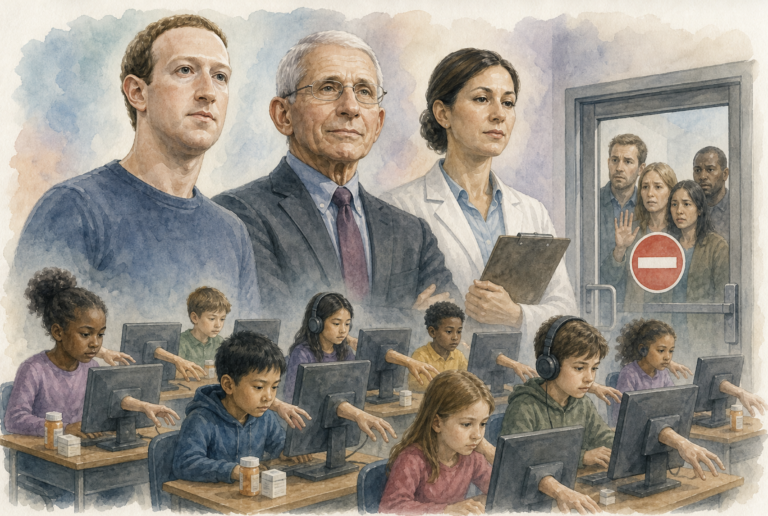

Last Monday AbleChild attended the Mental Health & Overmedicalization Summit in Washington, D.C. While Health and Human Services (HHS) Secretary, Robert F. Kennedy, Jr., headlined the Summit, it is the response by the American Psychiatric Association (APA) to Kennedy’s suggested recommendations to correct the mental health crisis in America that needs to be addressed.
Kennedy made it clear at the Summit that he intends to use the power of the federal government’s health agencies to make much needed changes to the current mental health model. In a nutshell, this model – diagnose and drug – is a complete failure, which is abundantly clear by the sheer fact that no one is getting better and every year more Americans are diagnosed with a mental illness and prescribed mind-altering drugs. And, with nearly $8 billion being spent by the taxpayers on psychiatric drugs, it’s abundantly clear what “treatment” is being utilized.
Too often, Kennedy insists, patients are not provided with the necessary information to make informed decisions, and the Secretary has no illusions about the overmedicalization that has been rampant for decades. Kennedy believes that patients “should receive clear, understandable information regarding the potential benefits and risks of psychiatric medications at initiation, during ongoing treatment, and when discontinuation is being considered.”
The HHS Secretary also is having federal guidelines drawn for those who have been on psychiatric drugs for years and are looking to safely taper off the drugs. Sounds fair and, frankly, should have been part of the diagnosing and prescribing from the beginning, making the APA’s response even more ironic and insulting.
While the APA “supports efforts to improve the quality, safety and evidence base of mental health treatment…” the APA also explains “we strongly object to framing the nation’s mental health crisis as primarily a problem of overmedicalization or overprescribing.” The APA further whines (wait for it) “that characterization oversimplifies a complex crisis and ignores the larger reality: too many patients cannot access timely, comprehensive care…” Really?
You can’t make this up. According to data provided by the National Institute of Mental Health (NIMH) in 2022, 60 million American adults (18 or older) – one in five – lived with at least one mental illness. That’s more than 23 percent of the population! And more than 30 million of those Americans received mental health “treatment.” Worse, though, is that one in five American children ages 3-17 also have been diagnosed with a mental illness.
How the APA can even remotely suggest that the mental health crisis is a lack of access is, well, crazy! Given the above numbers, one would have to ask who exactly isn’t getting access? When will the APA admit its responsibility in the mental health crisis? Will it take having 3 out of 5 Americans diagnosed and drugged? All?
AbleChild would suggest that the APA is extraordinarily lucky that HHS Secretary Kennedy hasn’t called in psychiatry’s great and near great for Congressional hearings to show any science for even one of its diagnoses. The fact is there is no abnormality in the brain, nothing wrong, nothing that can be “treated” with any measurable outcome that is any psychiatric diagnosis.
As is the case of children diagnosed with attention deficit hyperactivity disorder (ADHD) this “mental illness” is determined by a check list of behaviors that the APA deems abnormal such as fidgeting, being distracted, daydreaming, being impatient and talking excessively to name a few. What child doesn’t exhibit these behaviors?
Then, making it worse than just a mental illness label, children then are often fed Methylphenidate, the closest thing medicine has to cocaine, as “treatment.” The Food and Drug Administration (FDA) has no idea how the drug “works” as “treatment” for ADHD but is wholly aware of the serious side effects.
For example, sudden death has been reported as has cardiac abnormalities and other serious heart problems. Also, there is increased blood pressure, hallucinations, mania, psychosis, delusions, aggressive behavior, hostility, and suppression of growth to name a few. All this because the APA has concluded a kid wiggling in a chair is a mental illness. A kid being a kid is a mental illness.
Yes, the APA should immediately stop suggesting that not enough Americans are getting mental illness labels and should seriously count itself lucky that there have been no class action lawsuits brought against the organization for the harm that has been caused.
The APA should be thrilled that Secretary Kennedy is finally drawing up guidelines about what information should be provided to patients before any diagnosis is rendered. In fact, AbleChild would highly suggest that part of the informed consent guidelines should include that psychiatric diagnoses are completely subjective and could, and do, change based on which physician is seen. AbleChild also would suggest that the patient, if being prescribed a drug as “treatment,” is advised that the pharmaceutical companies have no idea how the drugs “work” for any alleged mental illness.
For decades the APA has convinced Americans that every human behavior, struggle, failure is due to a mental illness. Depressed? Mental illness. Anxious? Mental illness. Talk too much? Mental illness. Sadly, without being given important information to make informed decisions, tens of millions of Americans have accepted the label and have been sold mind-altering drugs as an answer – a “treatment.”
Secretary Kennedy is finally addressing the elephant in the room. Decades of mental health diagnosing and drugging aren’t working and worse, many who have lived with the failure of the modern mental health system are begging for guidance to get off debilitating drug regimens. The Secretary’s guidelines will help keep the APA honest and, rather than suggest that more Americans need to be labeled, it might behoove the APA to find a way to be honest about the human experience, to help Americans feel life with all its glorious ups and even its painful downs.
AbleChild is a 501(3) C nonprofit organization that has recently co-written landmark legislation in Tennessee, setting a national precedent for transparency and accountability in the intersection of mental health, pharmaceutical practices, and public safety.
What you can do. Sign the Petition calling for federal hearings!
Donate! Every dollar you give is a powerful statement, a resounding declaration that the struggles of these families will no longer be ignored. Your generosity today will echo through generations, ensuring that the rights and well-being of children are fiercely guarded. Don’t let another family navigate this journey alone. Donate now and join us in creating a world where every child’s mind is nurtured, respected, and given the opportunity to thrive. As a 501(c)3 organization, your donation to AbleChild is not only an investment in the well-being of vulnerable children but also a tax-deductible contribution to a cause that transcends individual lives.