MARYLAND, UNITED STATES 05.11.2026 Photo by Chief Petty Officer Kyle Steckler
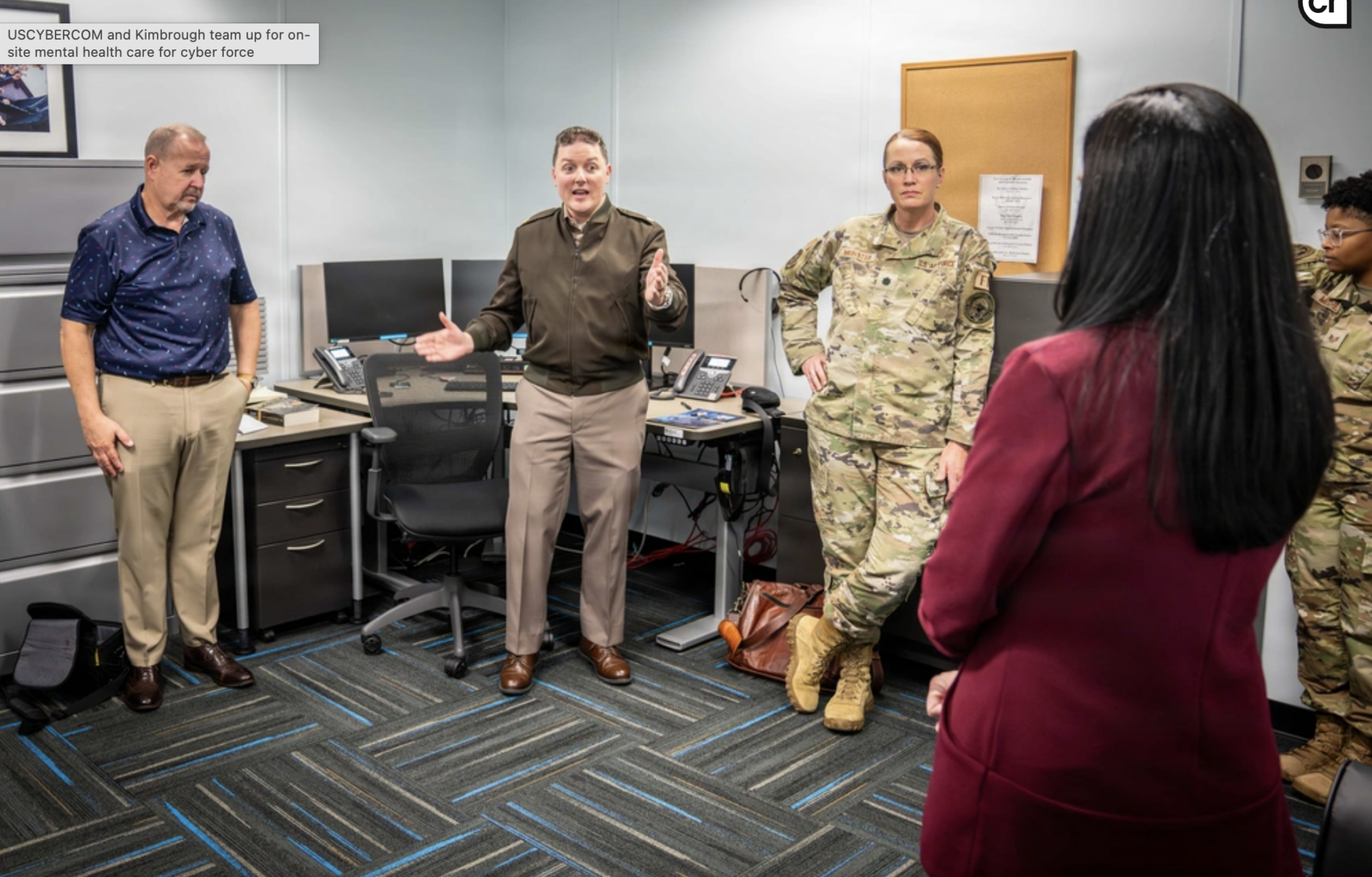
FORT GEORGE G. MEADE, Md. – U.S. Army Maj. CJ McAulay (center), USCYBERCOM command psychologist, and Mark Heithaus (left), a licensed clinical social worker with Kimbrough Ambulatory Care Center and one of USCYBERCOM’s new embedded mental health providers, present resource information during an open house on May 11, 2026.
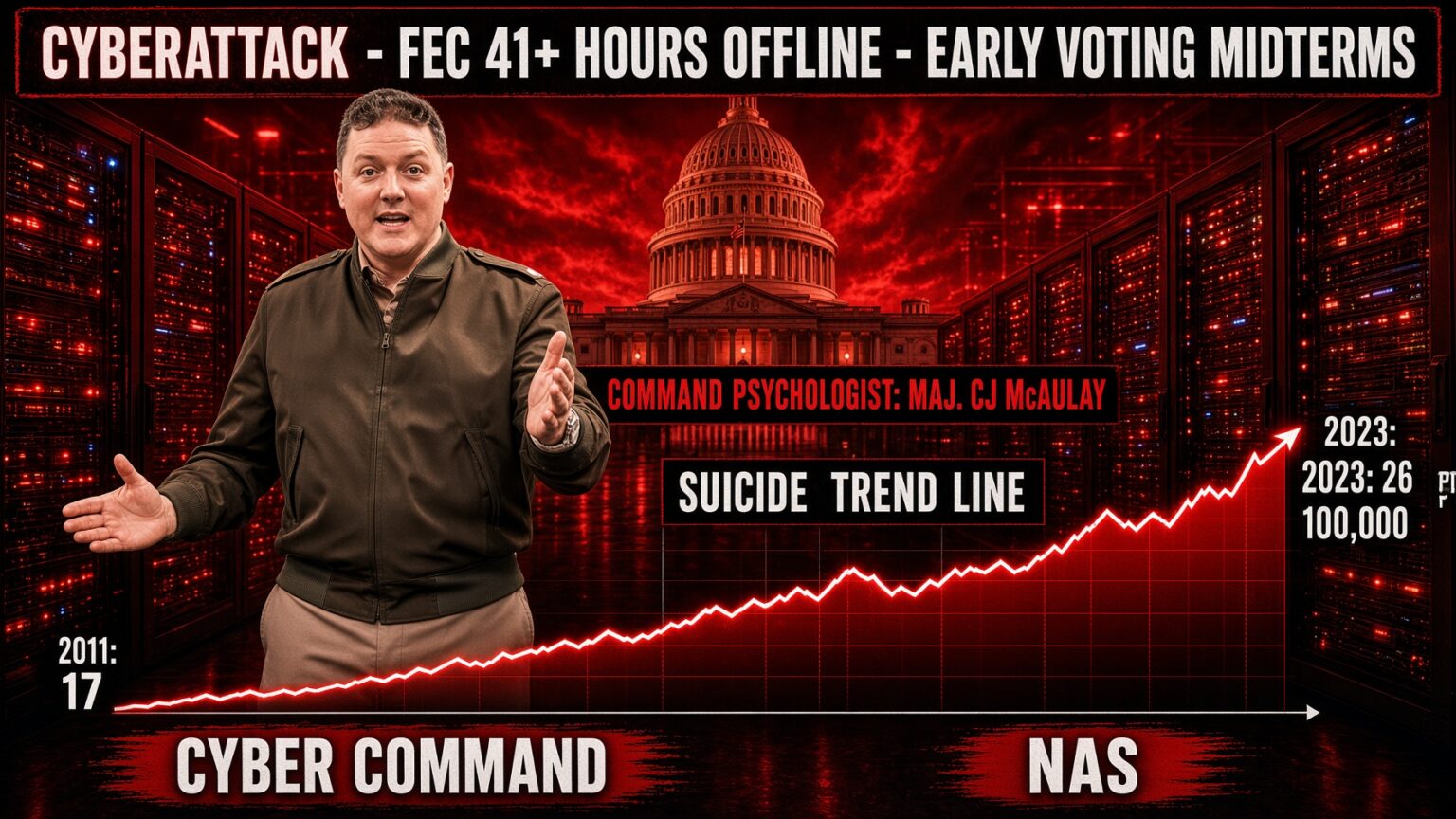
Five military personnel supporting Cyber Command and the National Security Agency (NSA) died by suicide in five weeks out of the 11 dead according to news reports with very little details. Who is accountable? Army Maj. CJ McAulay is U.S. Cyber Command’s command psychologist. Where is the scrutiny of the psychological leadership entrusted with our cyberwarriors?
Before McAulay reached one of the nation’s most sensitive military commands, his career passed through Fort Bragg and Fort Jackson. His profile lists him as group psychologist at Fort Bragg from May 2018 to June 2021, then Fort Jackson clinic chief in July 2021.
McAulay was at Fort Bragg for most of a devastating two-year stretch, leaving in June 2021. Forty-one soldiers assigned to the base took their own lives in 2020 and 2021, making suicide the leading cause of death. The Army confirmed that no base had ever recorded a higher two-year suicide toll.
Drugs were part of the story. Rolling Stone’s investigation, “’These Kids Are Dying,’” described an overdose crisis sweeping the base, where 109 soldiers died in just two years. WRAL reported that suicides and drugs killed Fort Bragg soldiers at a higher rate than combat and training deaths. Seth Harp, the reporter who uncovered the numbers, told WRAL the Army’s reluctance to release records amounts to a cover-up.
Then McAulay moved to Fort Jackson. On May 6, 2021, an Army trainee left the installation carrying an unloaded military rifle and hijacked a school bus carrying 18 children. The children and driver escaped without physical injury, but the breach was extraordinary. The soldier was found not guilty by reason of insanity and handed back to the psychiatric system.
Two months later, McAulay was there as Fort Jackson’s clinic chief, when the Army launched a pilot that embedded behavioral-health staff inside basic-training units. The brigade commander said the Army hadn’t done anything like it before. No published evaluation has surfaced showing whether it reduced suicides. Where are the results?
With behavioral-health disasters like these, our enemies don’t need to fire a shot.
And the pattern repeats. After the Cyber Command suicides, a request for $11 million in mental-health money advanced through Congress, even though officials have released no full breakdown of how those 11 military personnel died. Are these even accurate death toll numbers? Once again, the proposed answer is more money for the system, while the public is still waiting for a full accounting of the deaths.
Follow the trail. Fort Bragg: a devastating run of deaths. Fort Jackson: a school bus hijacked two months before he arrived. Cyber Command: a cluster of suicides and cyberattacks. Wherever McAulay has been posted, disaster has marked the post. Cyber Command’s command psychologist is the officer responsible for a new on-site mental-health partnership, and the same embedded program rolled out in basic-training units appears to be in place at Cyber Command.
After every psychiatric disaster and every mass shooting, the behavioral-health industry never addresses the root cause, which often is its own industry.
What did the toxicology reports and autopsies show? What medications or other substances, if any, were identified? Release the findings.
Then the industry expands its power inside the institution and collects more taxpayer money. A forward assault by a billion-dollar behavioral-health apparatus. The only honest measure is its outcomes.
The outcomes are not encouraging. Pentagon data shows the active-duty suicide rate climbing from 17 per 100,000 in 2011 to 26 in 2023, a decade of rising deaths alongside expanding prevention efforts.
Who evaluated these programs? Release the records, the toxicology reports, the autopsies, and the outcomes.
Look at the gaps in security. Look at the unresolved motives behind mass murders. No institution, including the behavioral-health industry, should be allowed to define the questions while escaping examination itself.
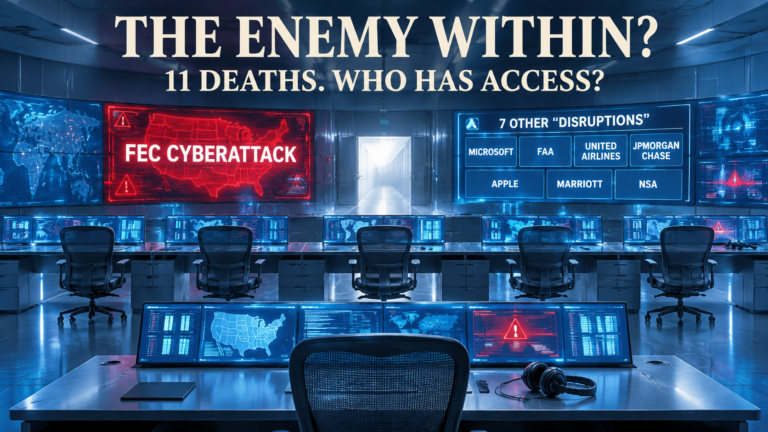
Cyber warriors were taken out by suicide. What role did the suicide cluster play in allowing access to the system for the cyberattack? Bad actor. The Federal Election Commission (FEC). The hacking that shut down the system during early voting, after an audit had documented lapses in its security.
Nidal Hasan, the former Army psychiatrist who killed 13 people at Fort Hood in 2009, is scheduled to face a firing squad on December 3rd. An Army psychiatrist entrusted with caring for soldiers became their killer. That fact alone should shatter any suggestion that a professional title, medical credentials, or access to a secure installation places someone beyond scrutiny.
The historical record of psychiatry deserves scrutiny. The Germans were lulled to sleep while psychiatrists sterilized, deceived, and killed patients. The German Association for Psychiatry and Psychotherapy formally apologized for it nearly 70 years later. To underestimate the psychiatric industry’s role in conflicts around the world would be a big mistake. They are capable of mass murder. Consider Nidal and all their clients tied to mass killings.
With a psychiatrist facing the firing squad, ask: what is the behavioral-health industry doing at the scene of the crimes? It appears there is a well coordinated effort to shuffle these psychiatrists and psychologists to key strategic locations to create as much damage as possible. The midterm elections server via the Federal Election Commission (FEC) is just the perfect landing place for a “bad actor.” The Nation still awaits a simple incident report of just how far the “bad actor” digital footprint went inside the FEC server.
Isn’t it time we looked within at the destruction, the authority, and the access granted in the name of “mental health?” Before granting more money and power, demand accountability.
AbleChild is a 501(c)(3) nonprofit organization that has recently co-written landmark legislation in Tennessee, setting a national precedent for transparency and accountability in the intersection of mental health, pharmaceutical practices, and public safety.
What you can do. Sign the Petition calling for federal hearings!
Donate! Every dollar you give is a powerful statement, a resounding declaration that the struggles of these families will no longer be ignored. Your generosity today will echo through generations, ensuring that the rights and well-being of children are fiercely guarded. Don’t let another family navigate this journey alone.
Donate now and join us in creating a world where every child’s mind is nurtured, respected, and given the opportunity to thrive. As a 501(c)3 organization, your donation to AbleChild is not only an investment in the well-being of vulnerable children but also a tax-deductible contribution to a cause that transcends individual lives.